 PTF DMX 15-80S DIGITAL DELAY
New
Two delay lines. One pitch card.
- Two Delay Lines: Up to 1638 ms on each channel at 40 kHz, through a 12-bit converter with gain ranging. Times are typed on the keypad in milliseconds or nudged in 25 µs steps.
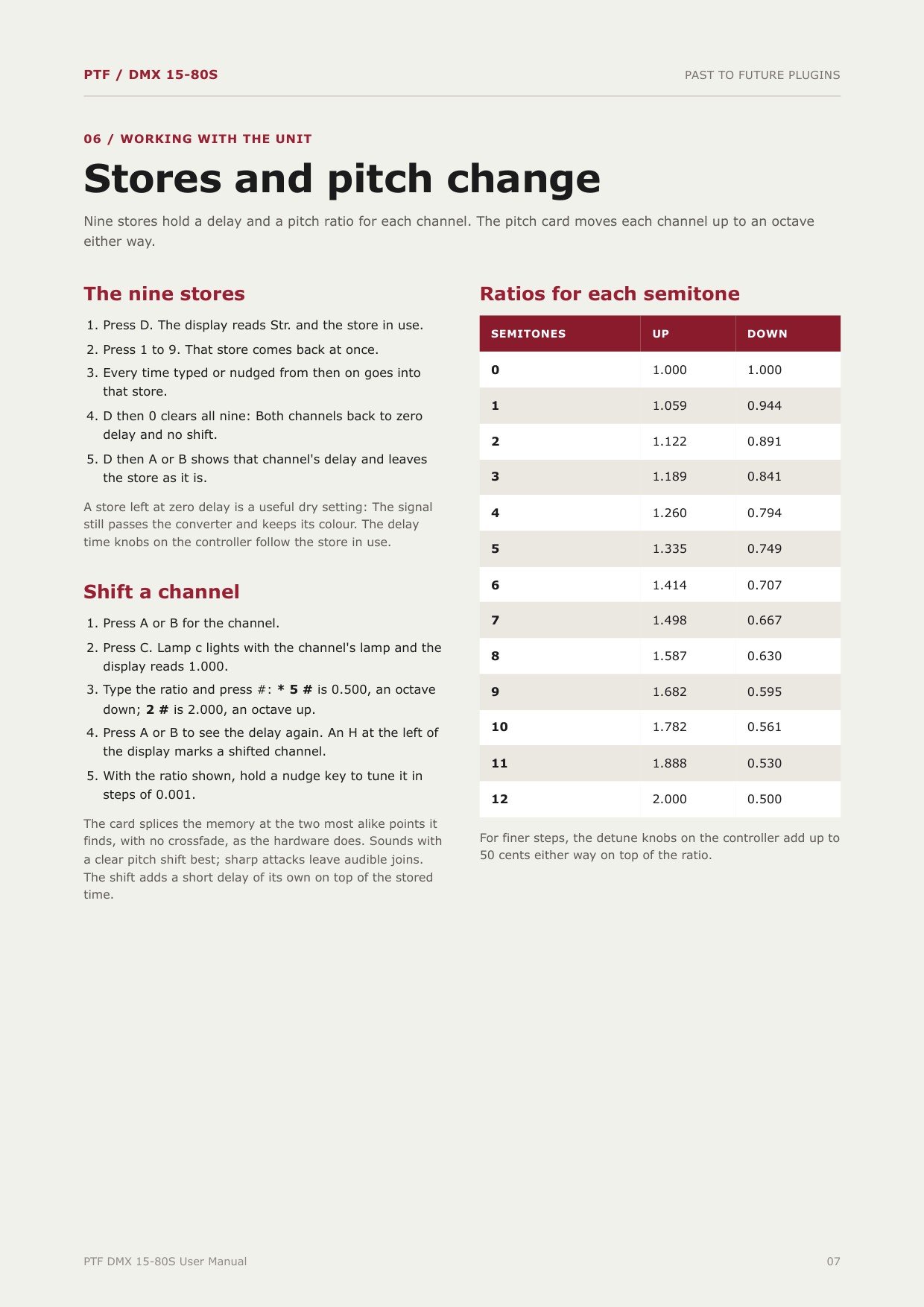
- A Pitch Card: Each channel shifts from an octave down to an octave up, to three decimals, splicing the memory at the two most alike points it finds, as the hardware does.
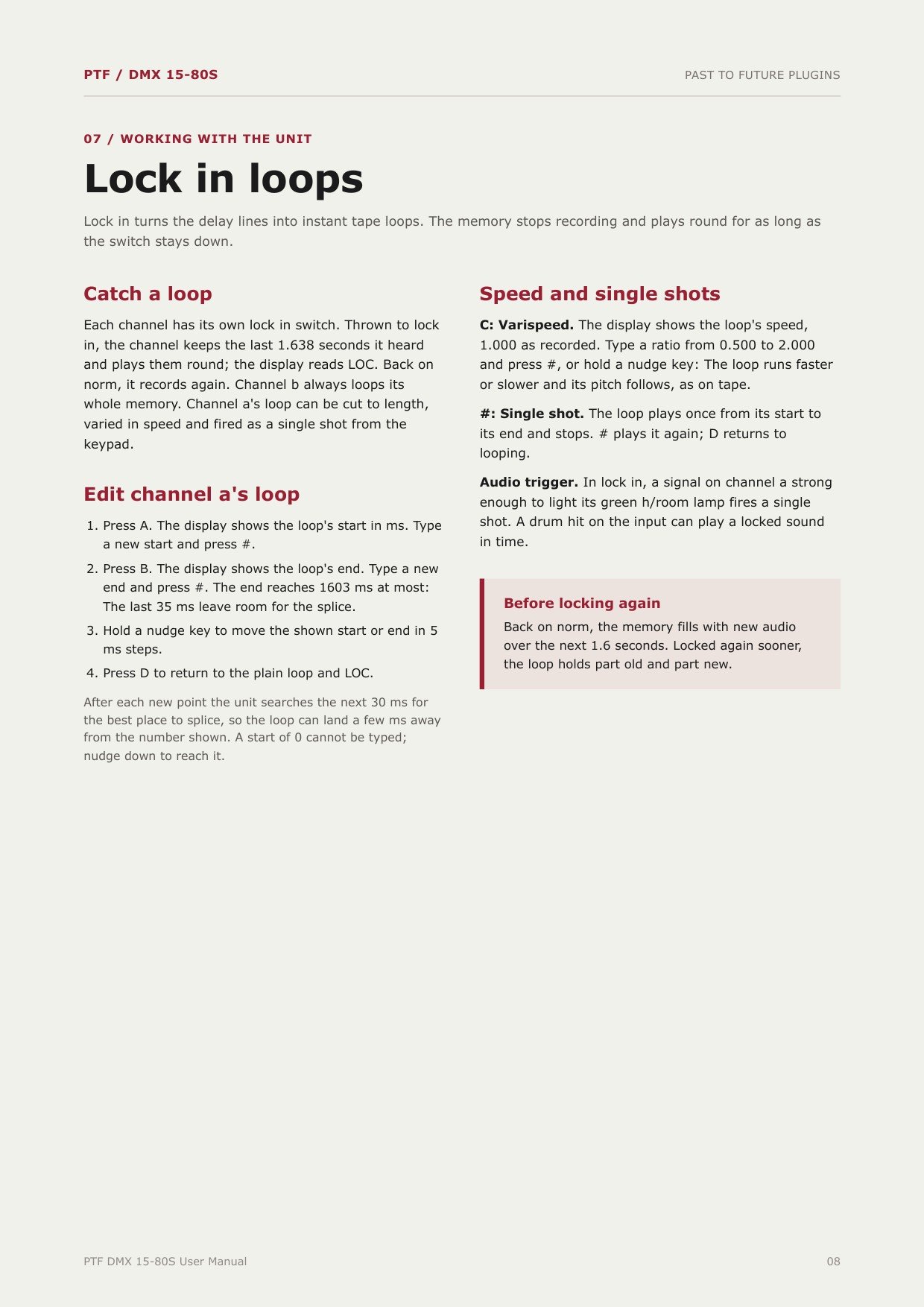
- Lock In Loops: The memory stops recording and plays round as a tape loop. Channel a's loop can be cut to length, varied in speed and fired as a single shot, by hand or by the input.
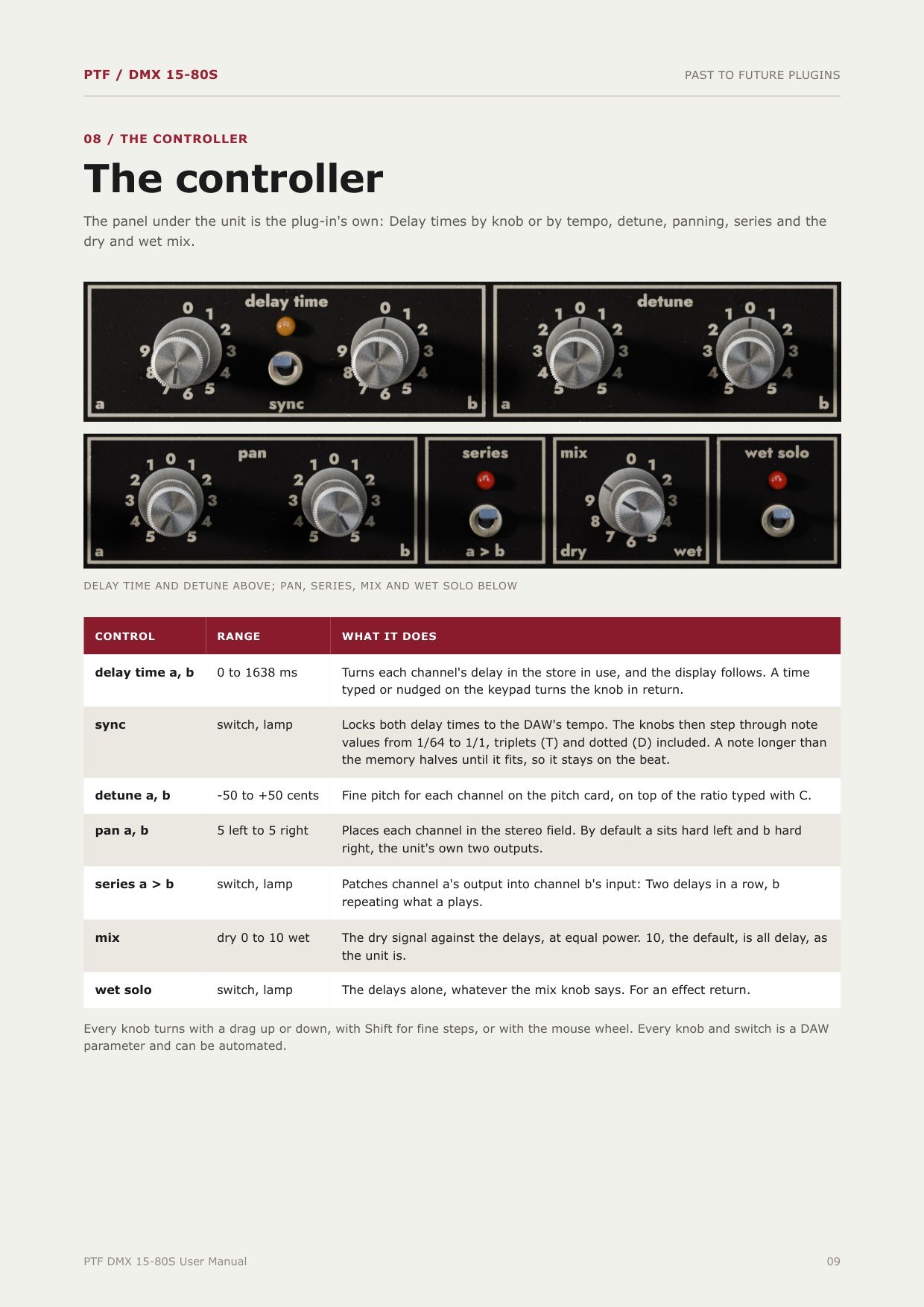
- A Controller for the DAW: Delay times free or synced to the tempo, detune in cents, panning, a series patch and a dry and wet mix with wet solo, on a panel under the unit.
- Mac and Windows: AU and VST3 on macOS, universal for Intel and Apple Silicon. VST3 on Windows, 64-bit.
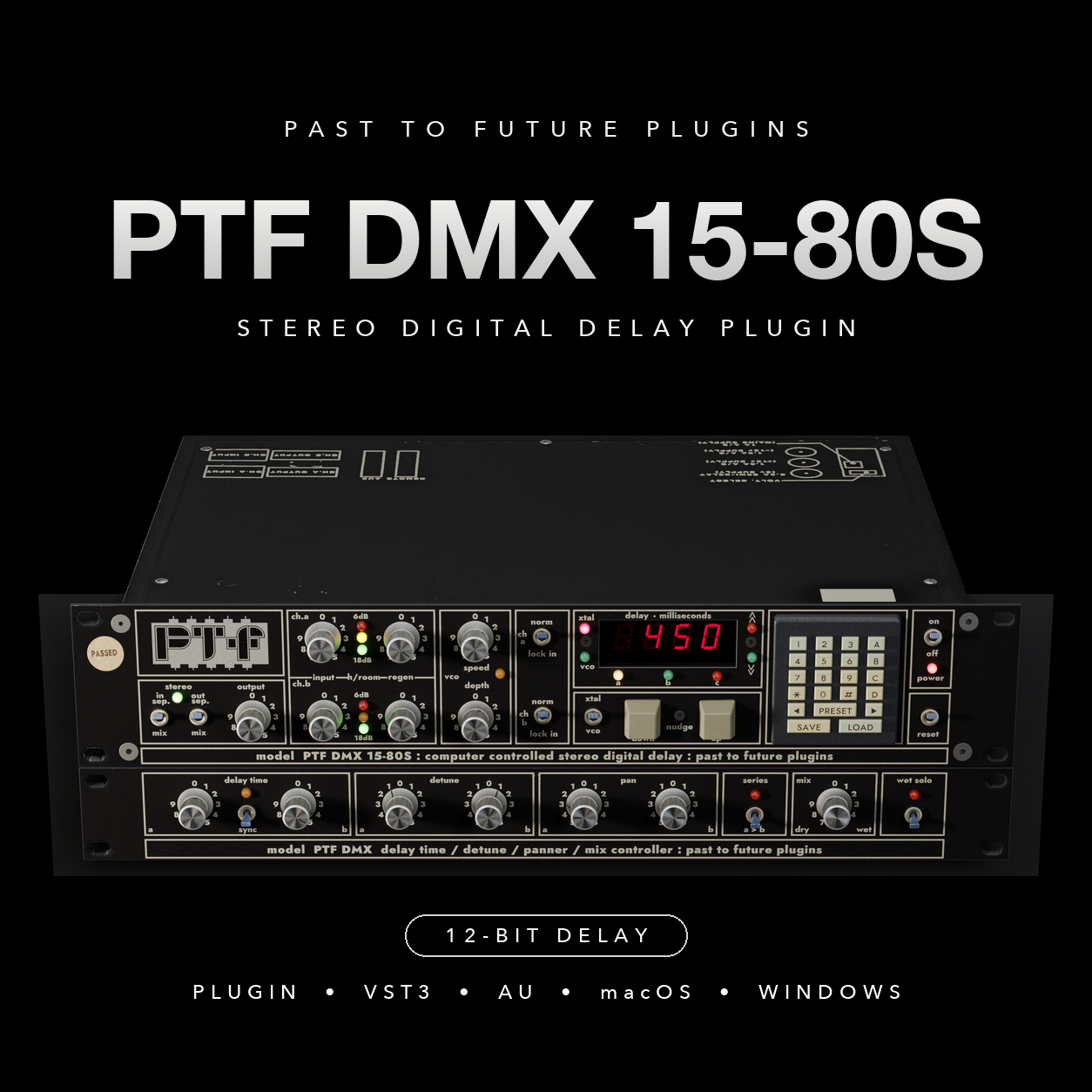 PTF DMX 15-80S DIGITAL DELAY
Windows and macOS
Insert it on a vocal, a guitar or an effect return. Type a time on the keypad, feed the repeats back with regen, swing the clock with the VCO for chorus and double tracking, or move each channel up or down with the pitch card. The mix knob on the controller blends the dry signal back in.
Rebuilt board by board
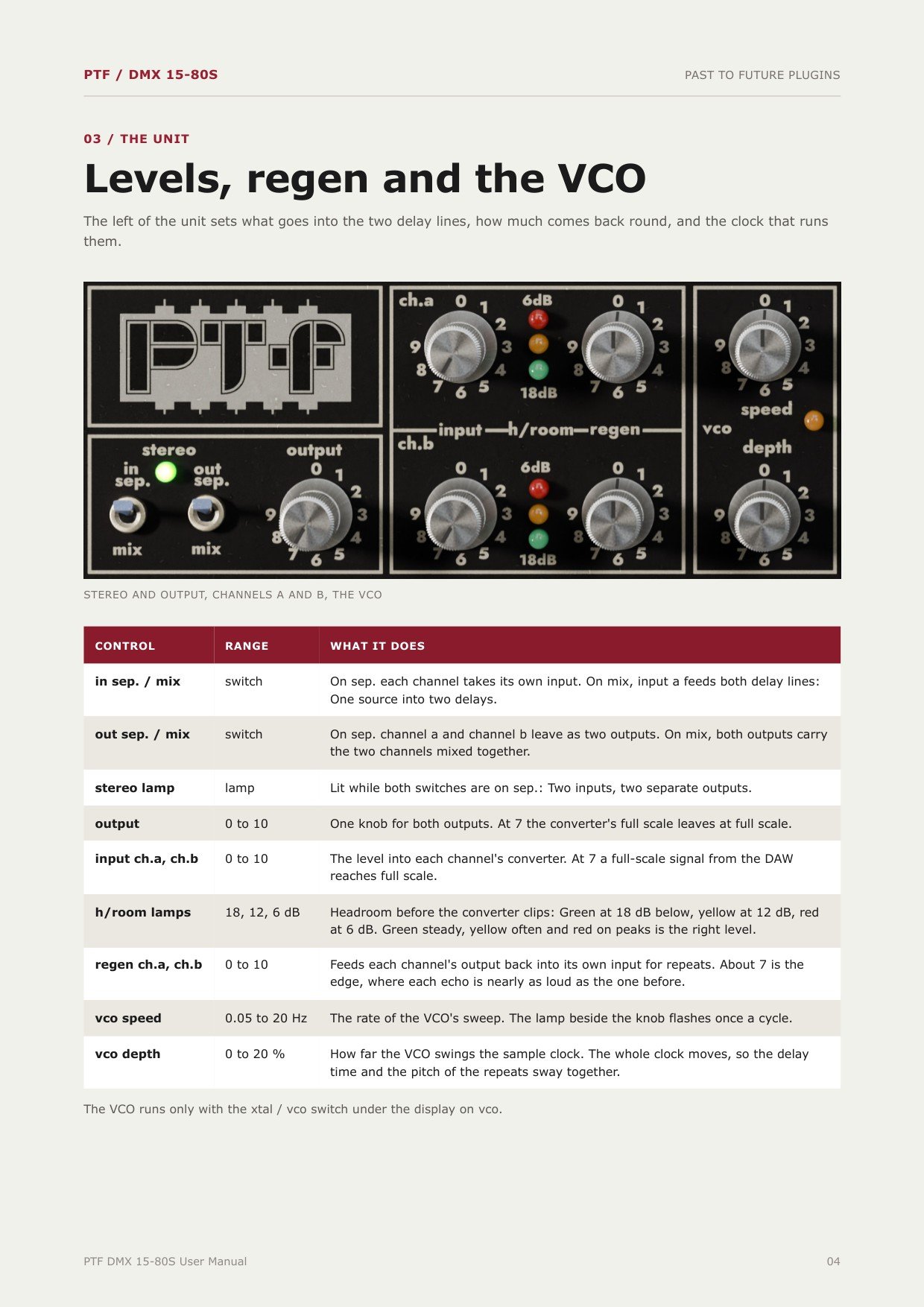
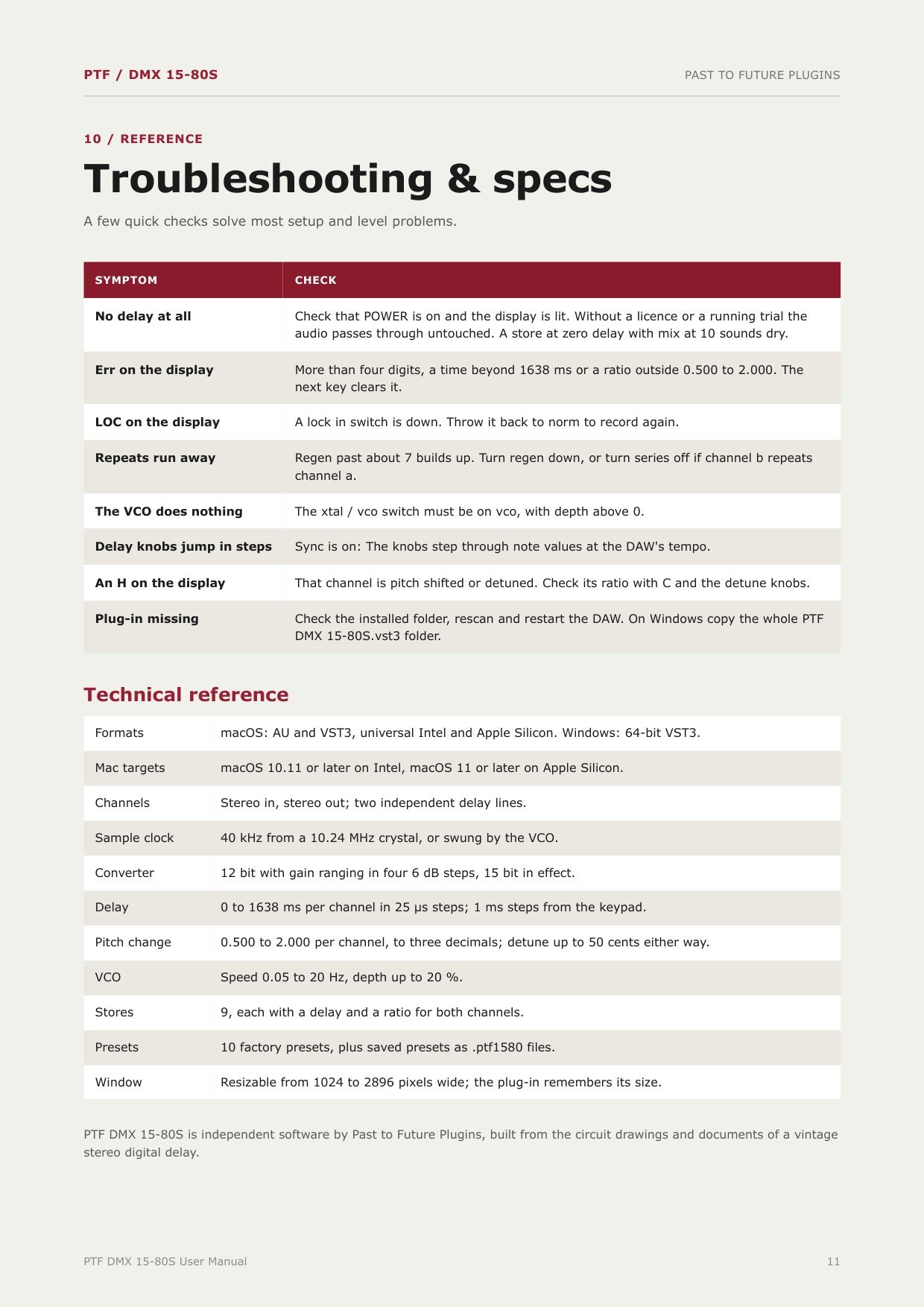
PTF DMX 15-80S follows the unit's own signal path, taken from its circuit drawings. The input filter and level, the sampler that adds the regeneration, a 12-bit converter that switches its gain in four 6 dB steps, the memory, the converter back to audio with its own filter, and the output. The clock runs from a 10.24 MHz crystal at 40 kHz, or from the VCO, which swings the whole clock so the delay time and the pitch of the repeats sway together. Every repeat passes the converter again, so the echoes darken and roughen as they fall away.
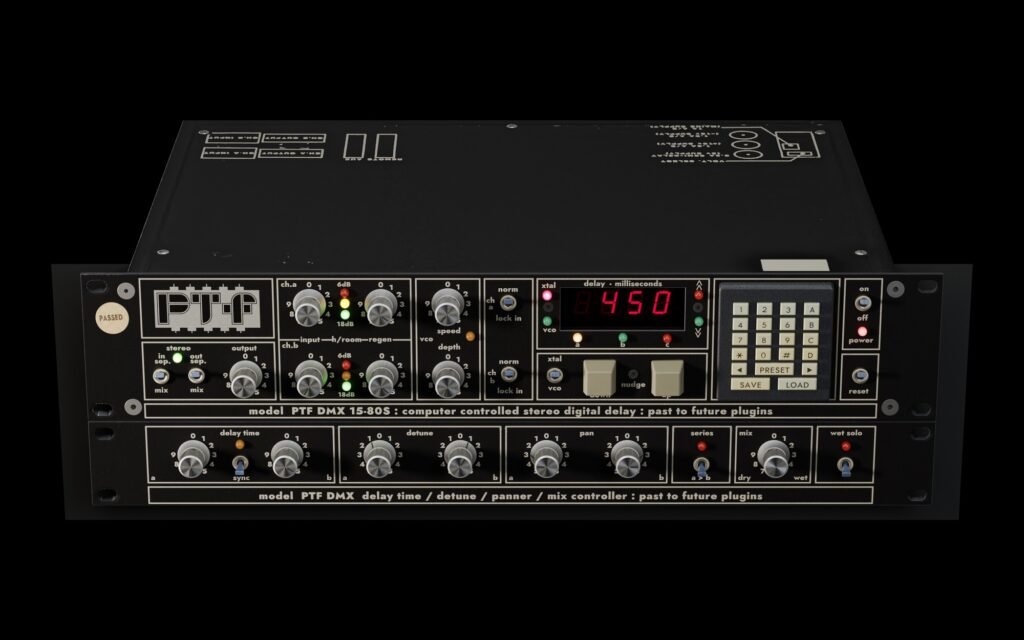
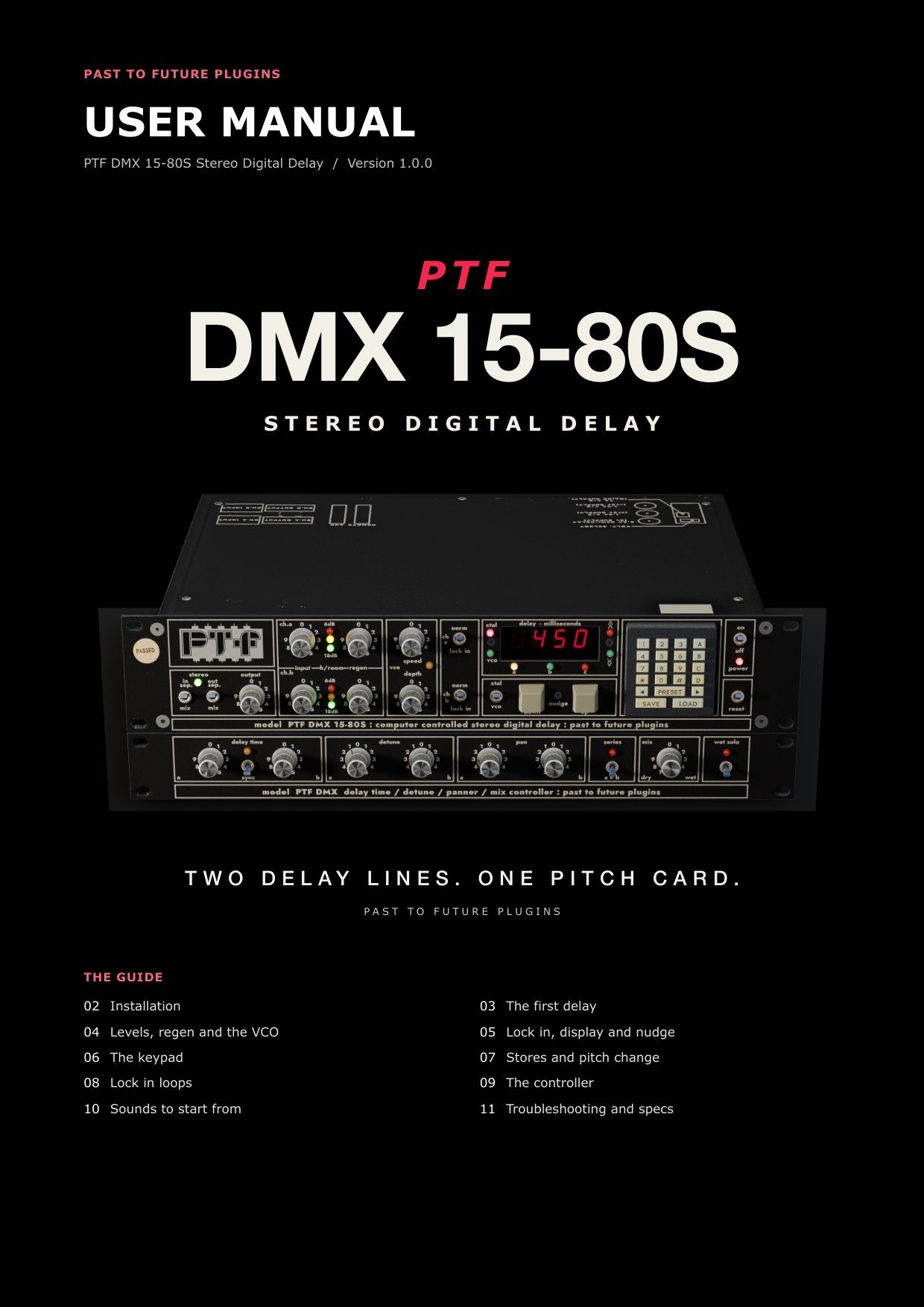
The whole unit, and a controller under it
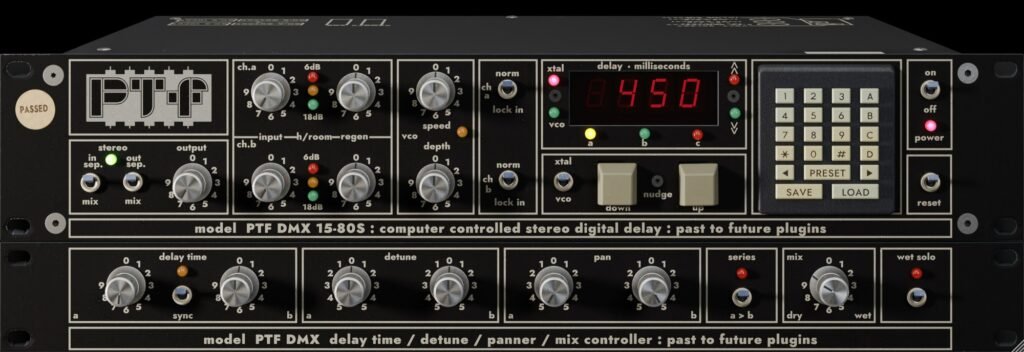
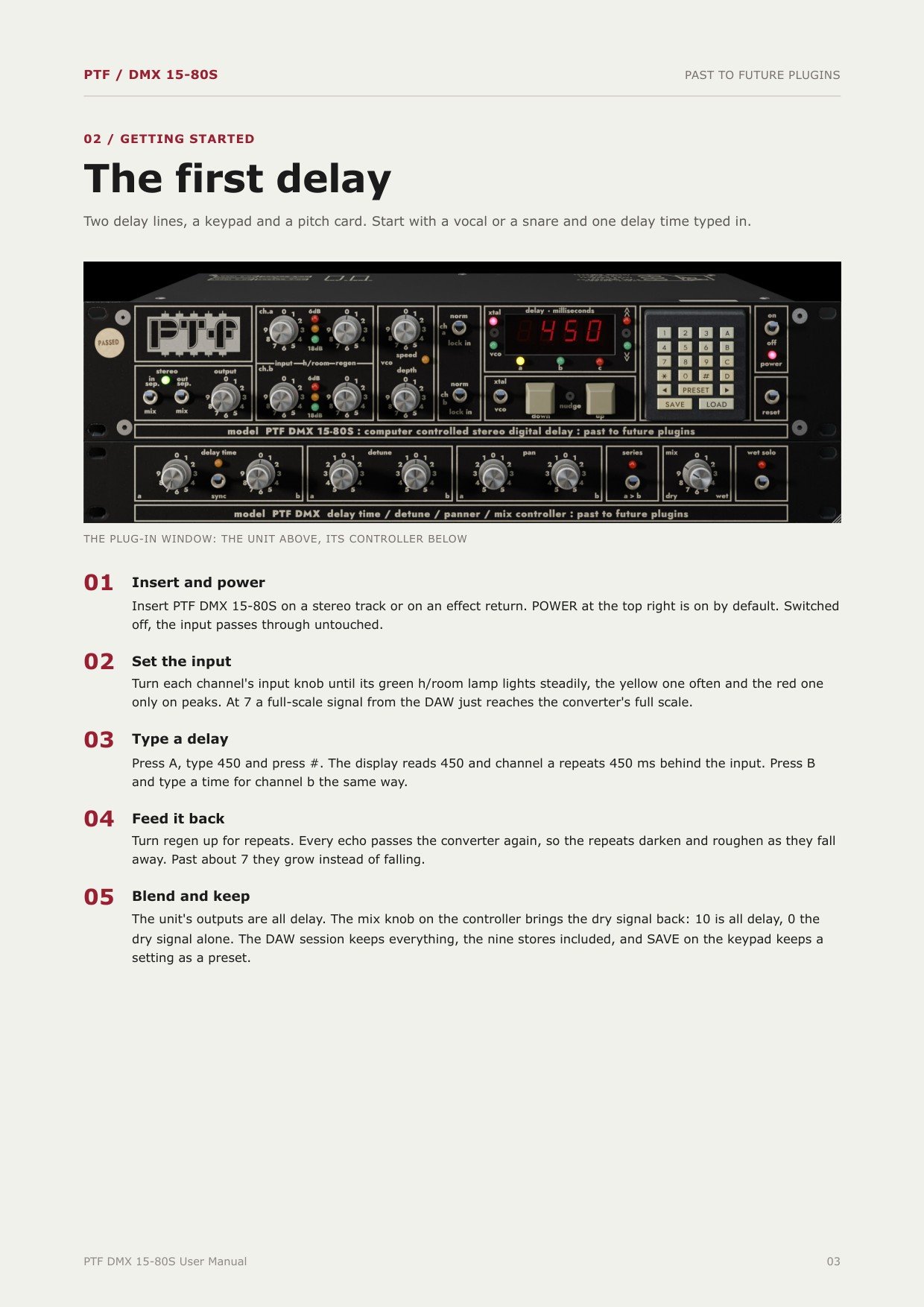
The window shows the unit as it stands in the rack, with its controller below. Input, regen and output set the levels, and the h/room lamps show the headroom before the converter clips. The in and out switches choose between two separate channels and one source into two delays. Under the unit, the controller sets the delay times by knob or by the DAW's tempo in note values, detunes each channel by up to 50 cents, pans the two channels, patches channel a into channel b and blends the dry signal back in. Every knob and switch is a DAW parameter and can be automated.
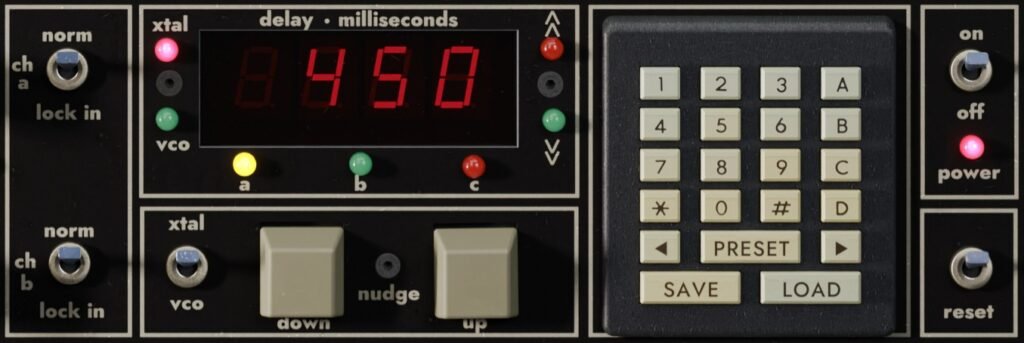
Typed, stored and nudged
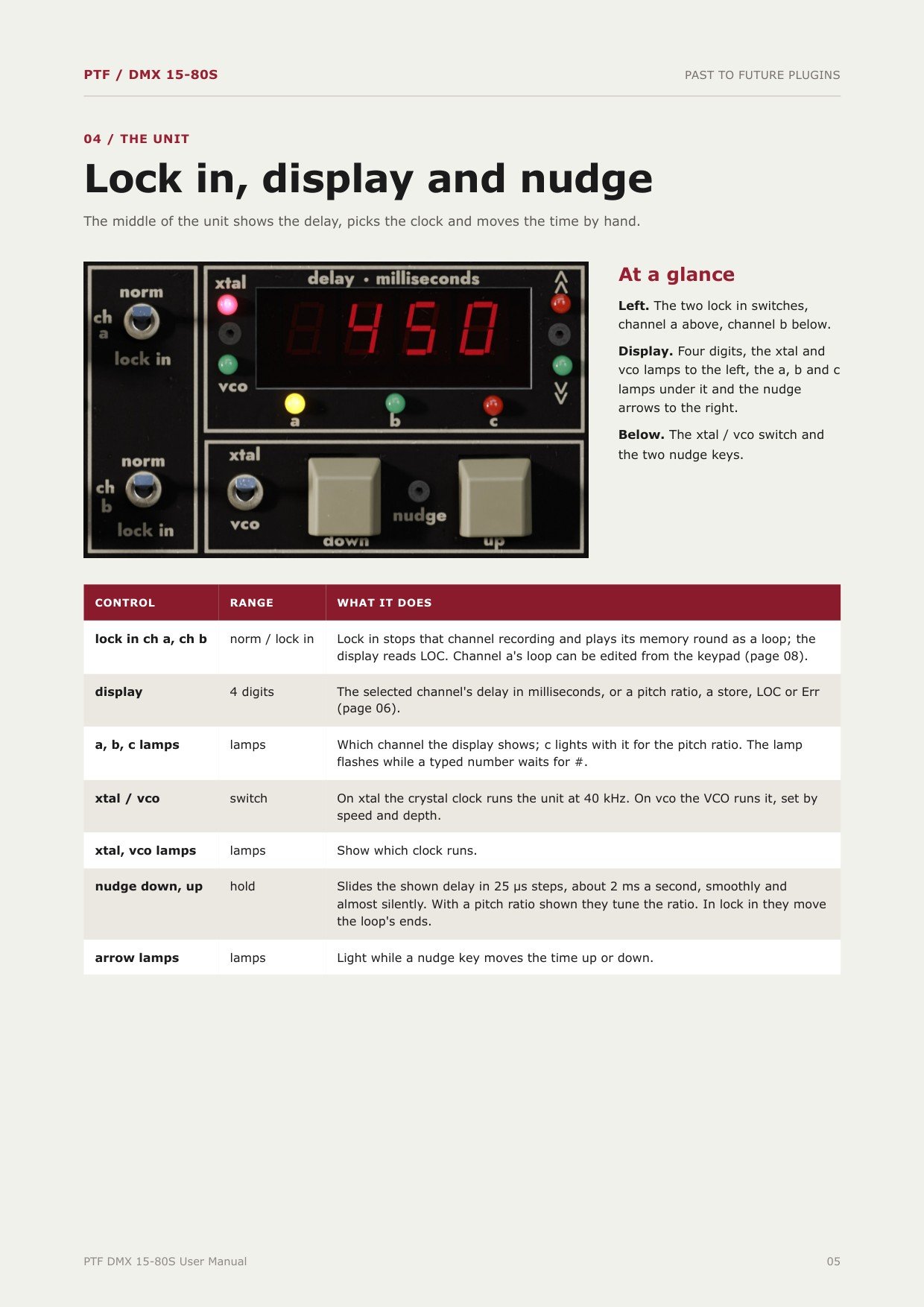
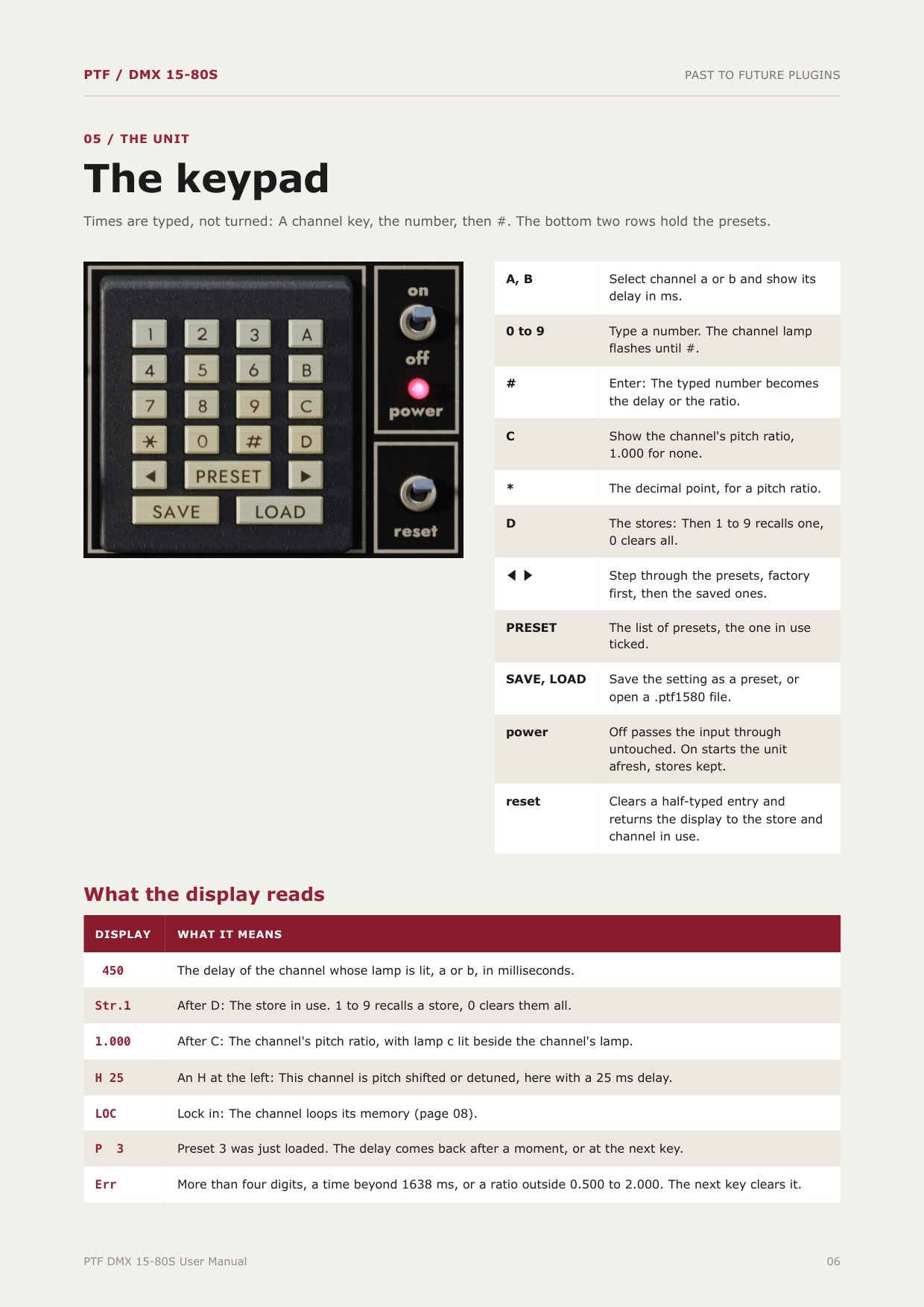
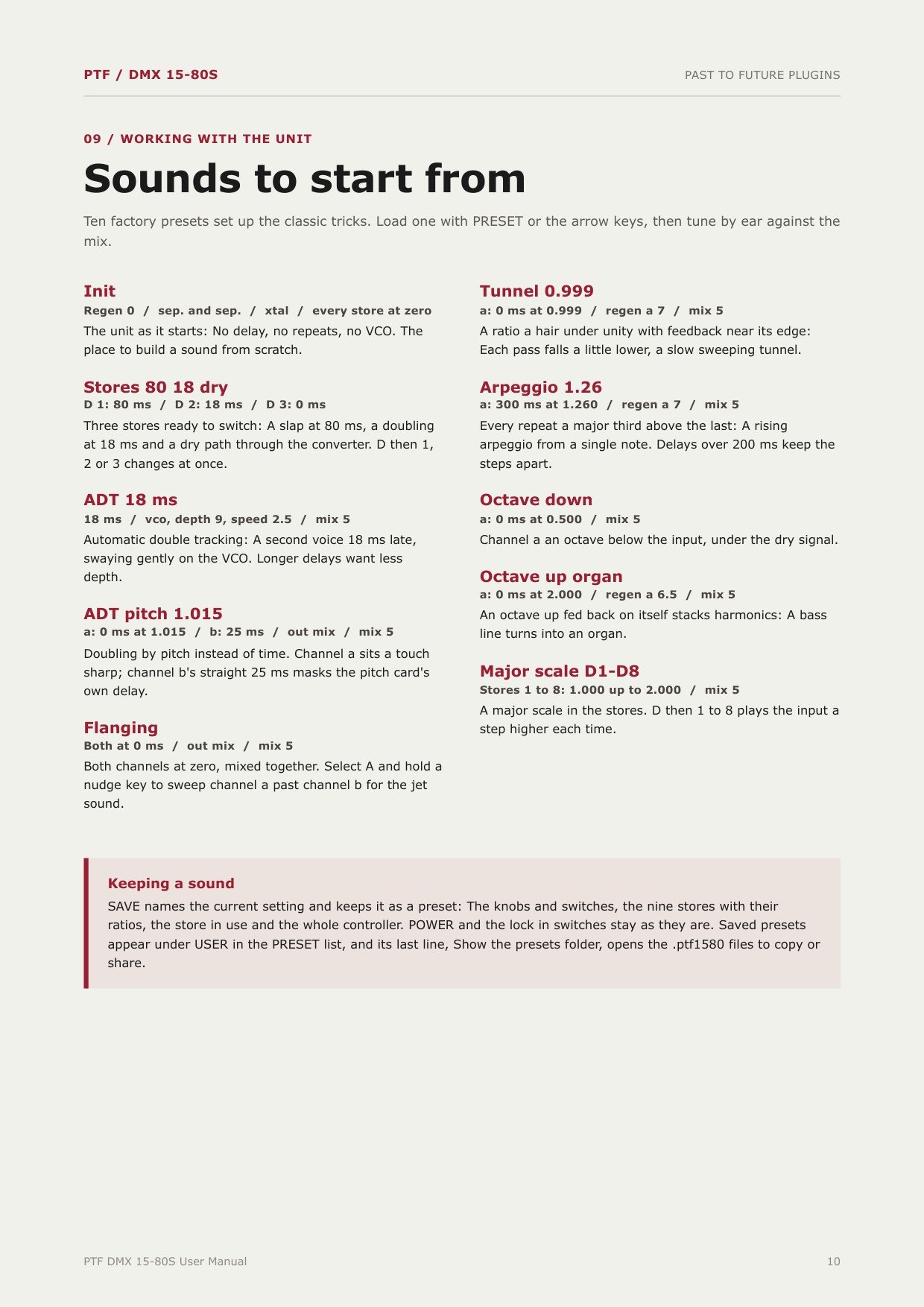
Times are typed, not turned. Press A, type 450 and press #, and channel a repeats 450 ms behind the input. Nine stores hold a delay and a pitch ratio for each channel and come back at once with D and a number. C shows a channel's pitch ratio: 2 is an octave up, 0.5 an octave down. The nudge keys slide the time in 25 µs steps, about 2 ms a second and almost silently, the classic way to flange. Ten factory presets set up the tricks, from double tracking and flanging to an arpeggio and an octave organ.
| Systems | Windows 10 and later, macOS 10.11 and later |
|---|---|
| Architecture | Apple silicon and Intel |
| Trial | Seven days, everything unlocked |
| Licence | 2 computers |
| Updates | Included. New versions appear in your account. |
| Refund | Seven days, no reasons needed |
| Formats | Audio Unit and VST3 on macOS. VST3 on Windows, 64-bit. |
| macOS | 10.11 or later on Intel, 11 or later on Apple Silicon. Universal. |
| Windows | Windows 10 or later, 64-bit. |
| Channels | Stereo in, stereo out. Two independent delay lines. |
| Delay | 0 to 1638 ms per channel in 25 µs steps, 1 ms steps from the keypad. |
| Converter | 12 bit at 40 kHz, with gain ranging in four 6 dB steps, 15 bit in effect. |
| Pitch Change | 0.500 to 2.000 per channel, to three decimals. Detune up to 50 cents either way. |
| VCO | Speed 0.05 to 20 Hz, depth up to 20 %. |
| Stores | Nine, each with a delay and a pitch ratio for both channels. |
| Presets | Ten factory presets, plus saved presets as .ptf1580 files. |
| Window | Resizable, and it remembers its size. |
| Signing | Developer ID signed and notarised by Apple. |
PTF DMX 15-80S DIGITAL DELAY
One payment. Yours to keep.