 PTF 224 WHITE REVERB
New
Two reverb times, set while the sound plays.
- Nine Programs: Two small and one large concert hall, a vocal plate, an acoustic chamber, a percussion plate, a constant density plate, a room and Chorus A. The program set of the machine's V4.4 software, with the settings CALL loads.
- Matched to a Real Unit: Across the eight reverb programs and seven octave bands from 125 Hz to 8 kHz, the reverb times land within 8 % of the sampled hardware, 2.2 % on average.
- The Machine's Converter: A 12-bit mantissa with a 2-bit exponent behind an 8th-order input filter at 8.1 kHz, so the noise floor moves with the signal as it did on the machine.
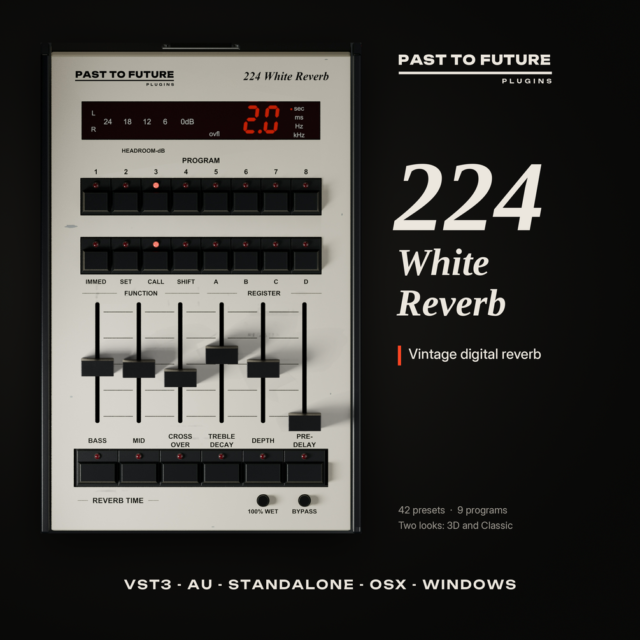
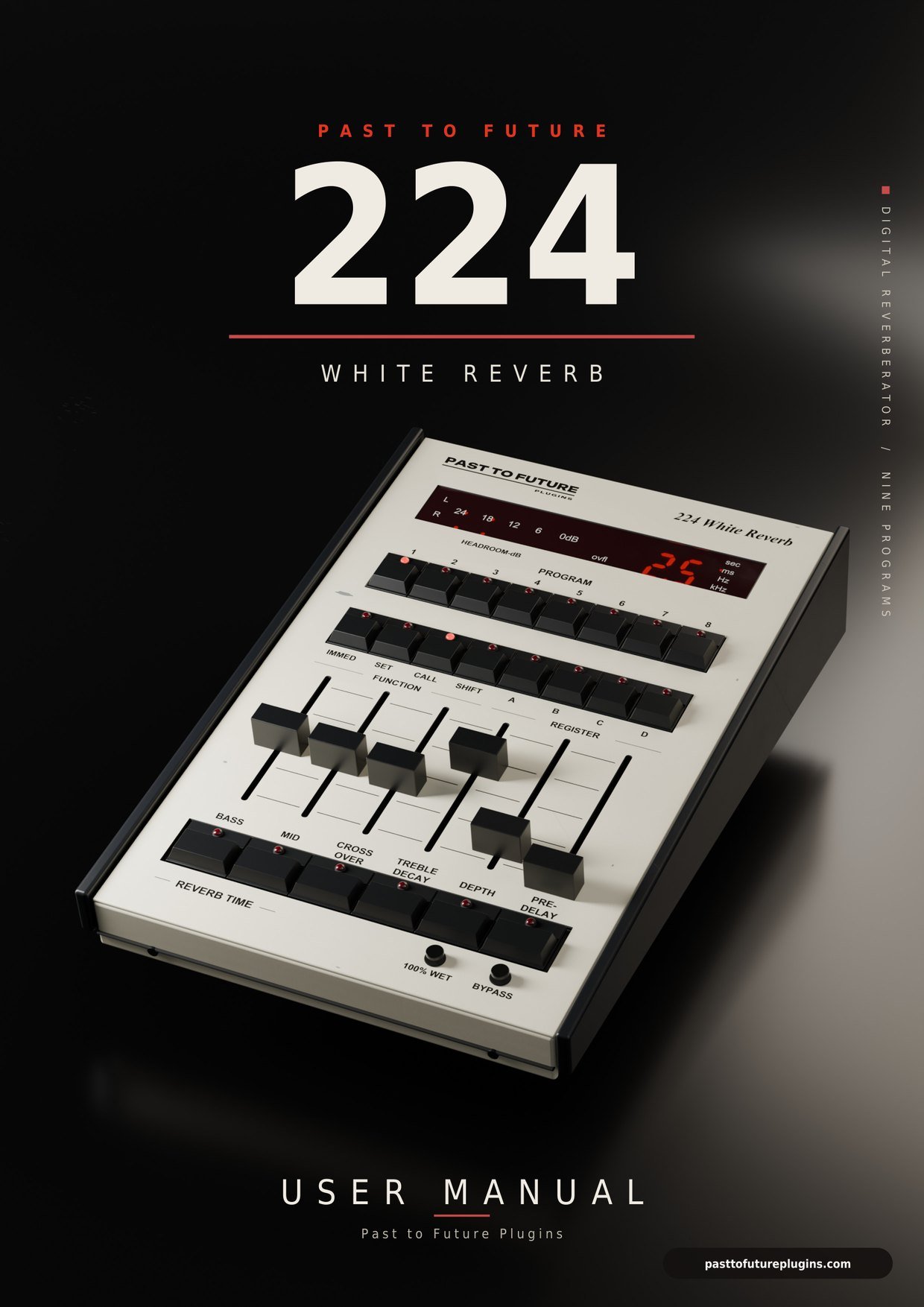
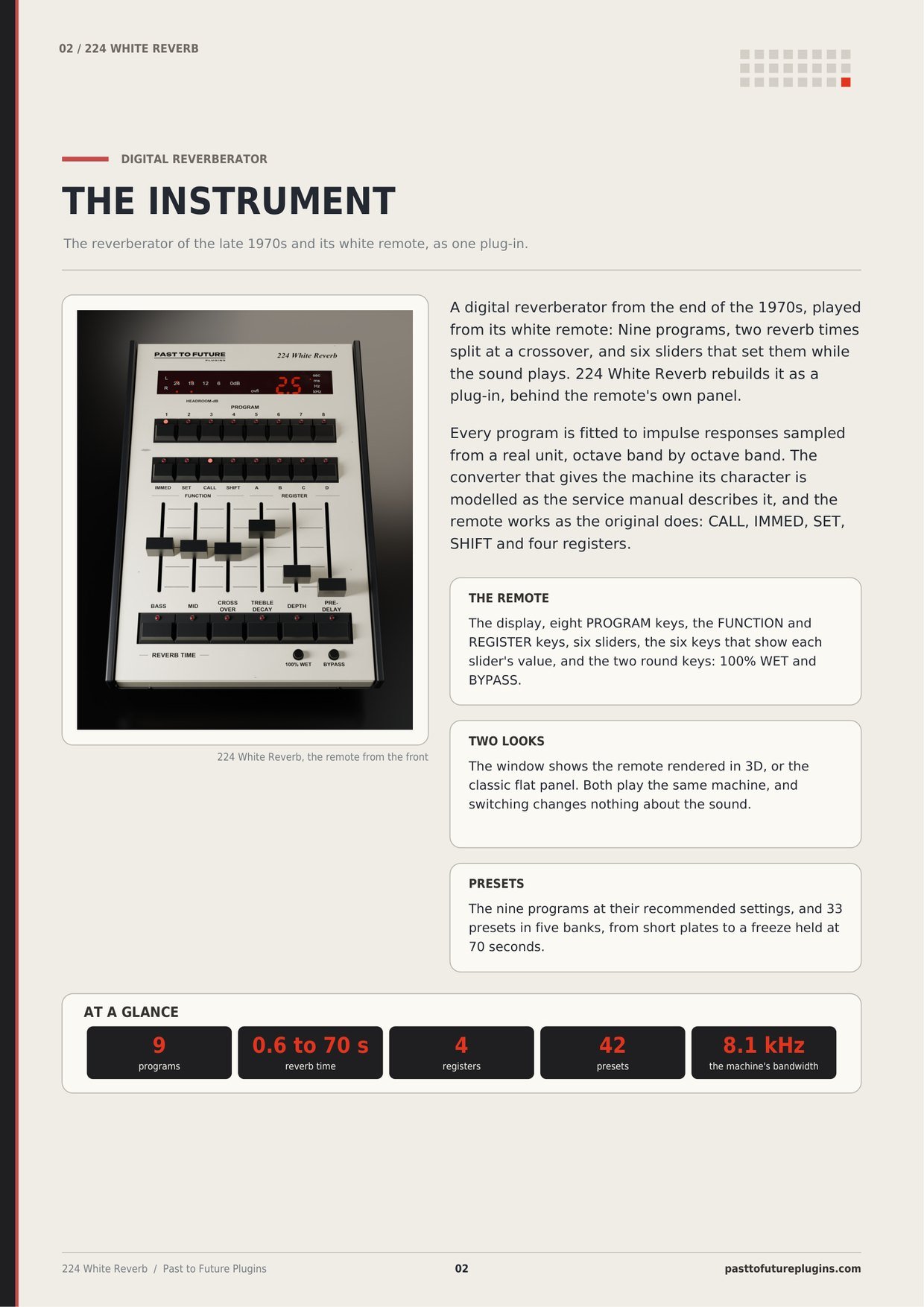
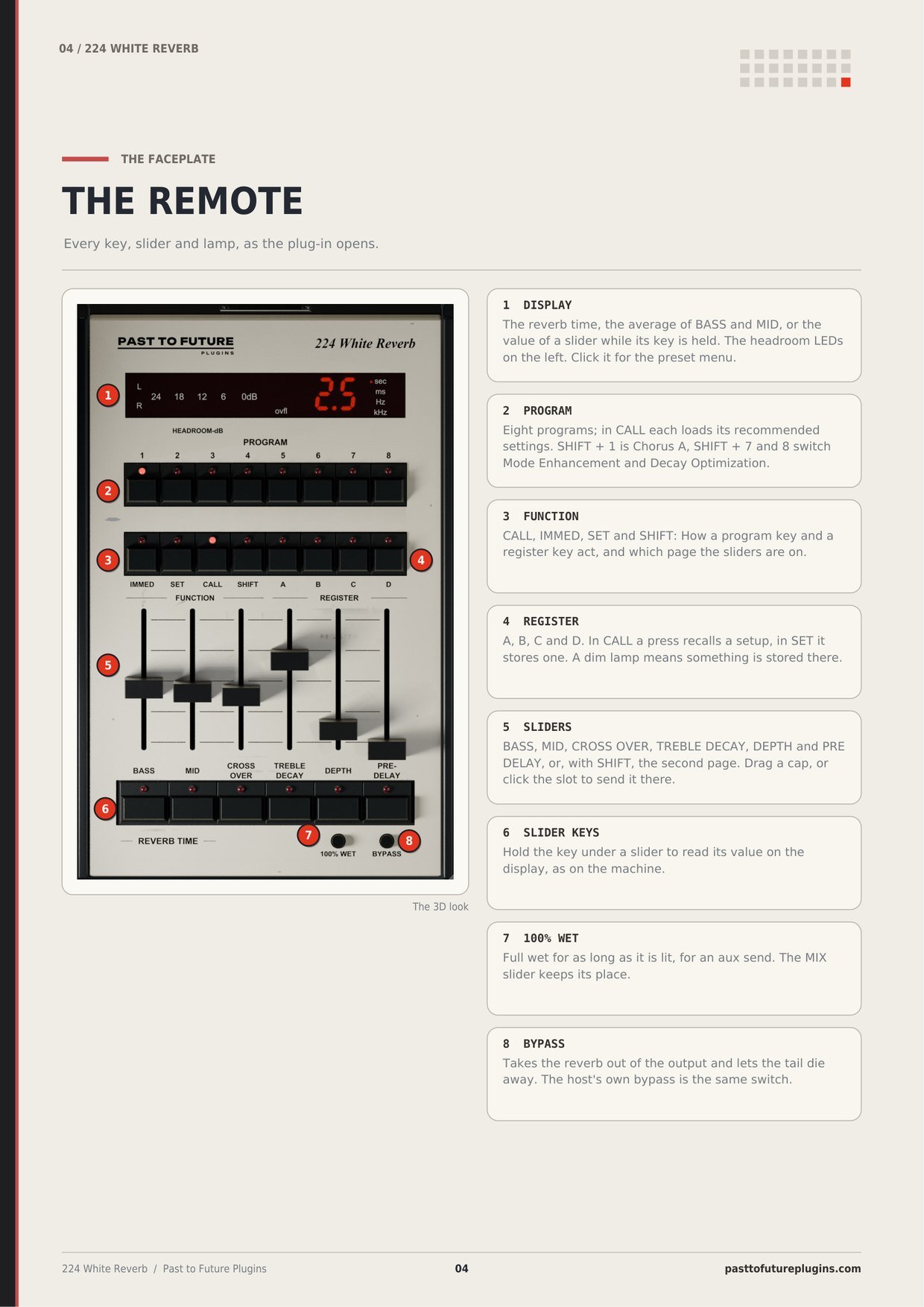
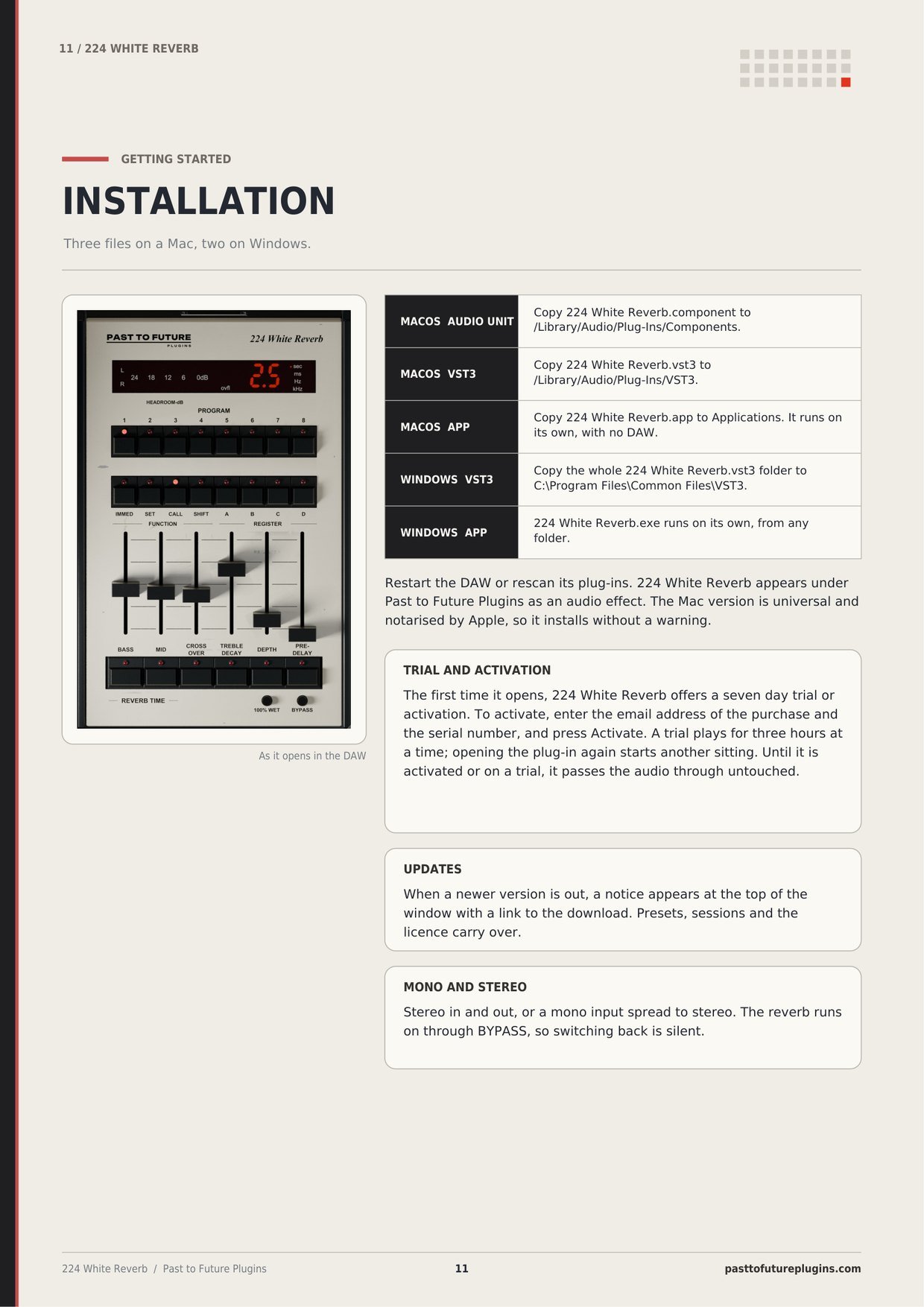
- The White Remote: Eight PROGRAM keys, CALL, IMMED, SET and SHIFT, four registers, six sliders with the keys that read them, 100% WET and BYPASS.
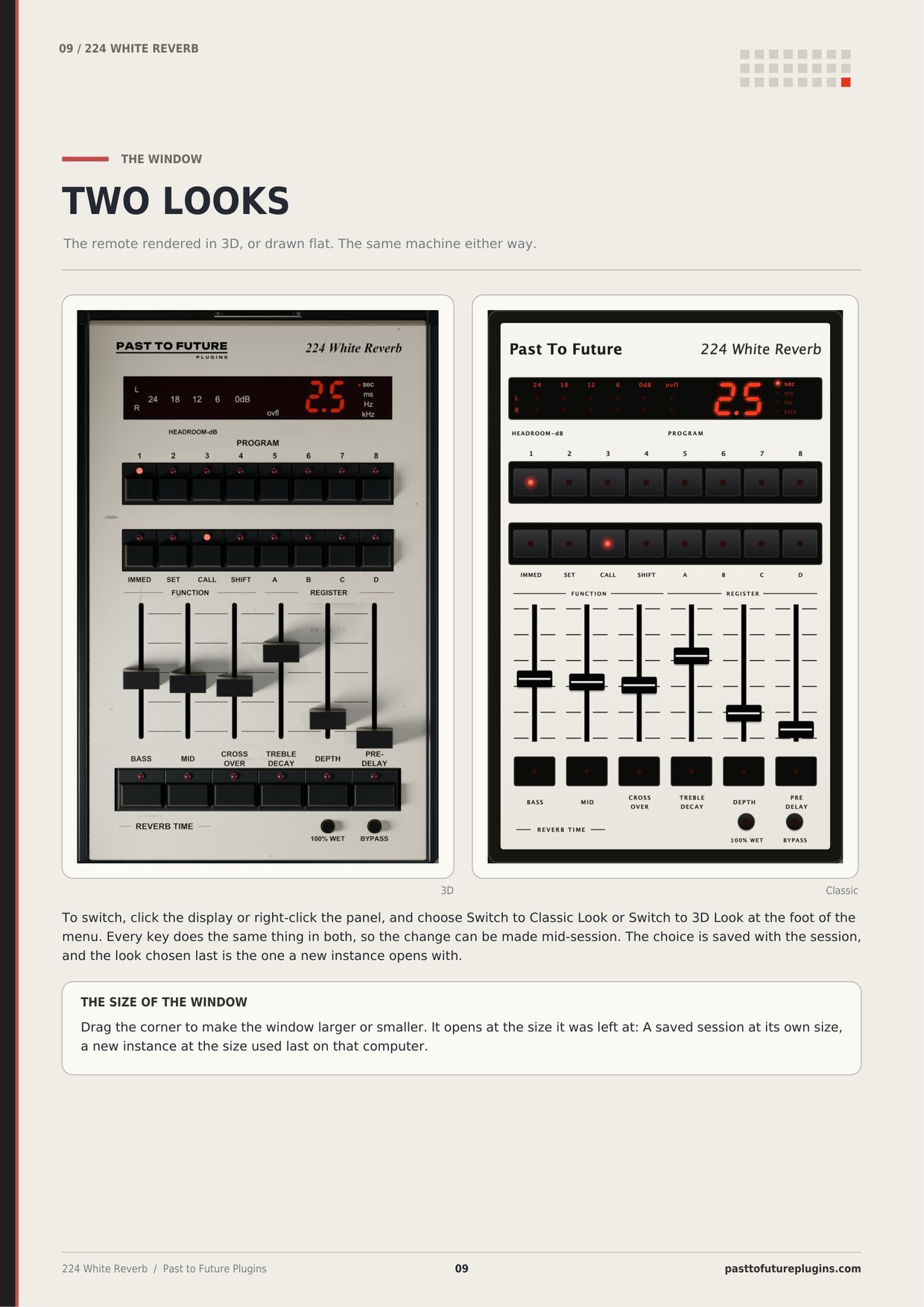
- Two Looks: The remote rendered in 3D, or the classic flat panel. Both play the same machine, and switching changes nothing about the sound.
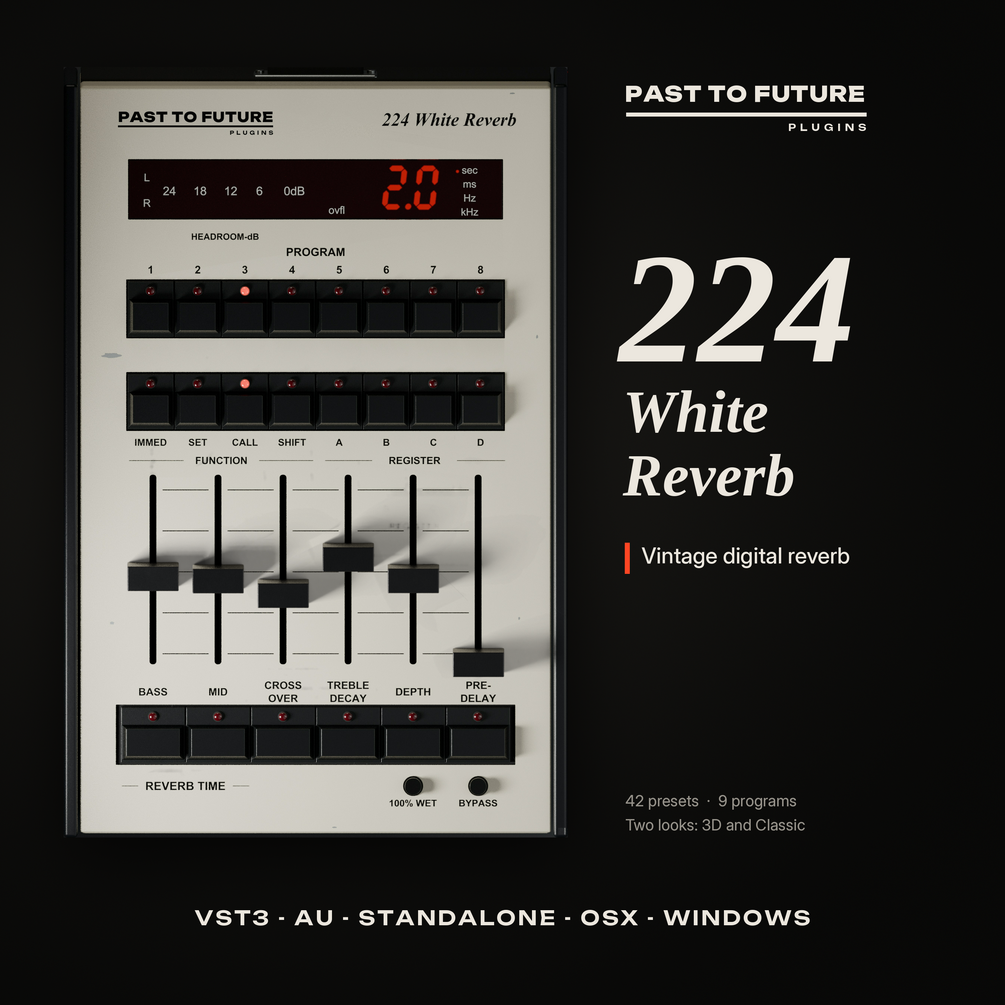 PTF 224 WHITE REVERB
Windows and macOS
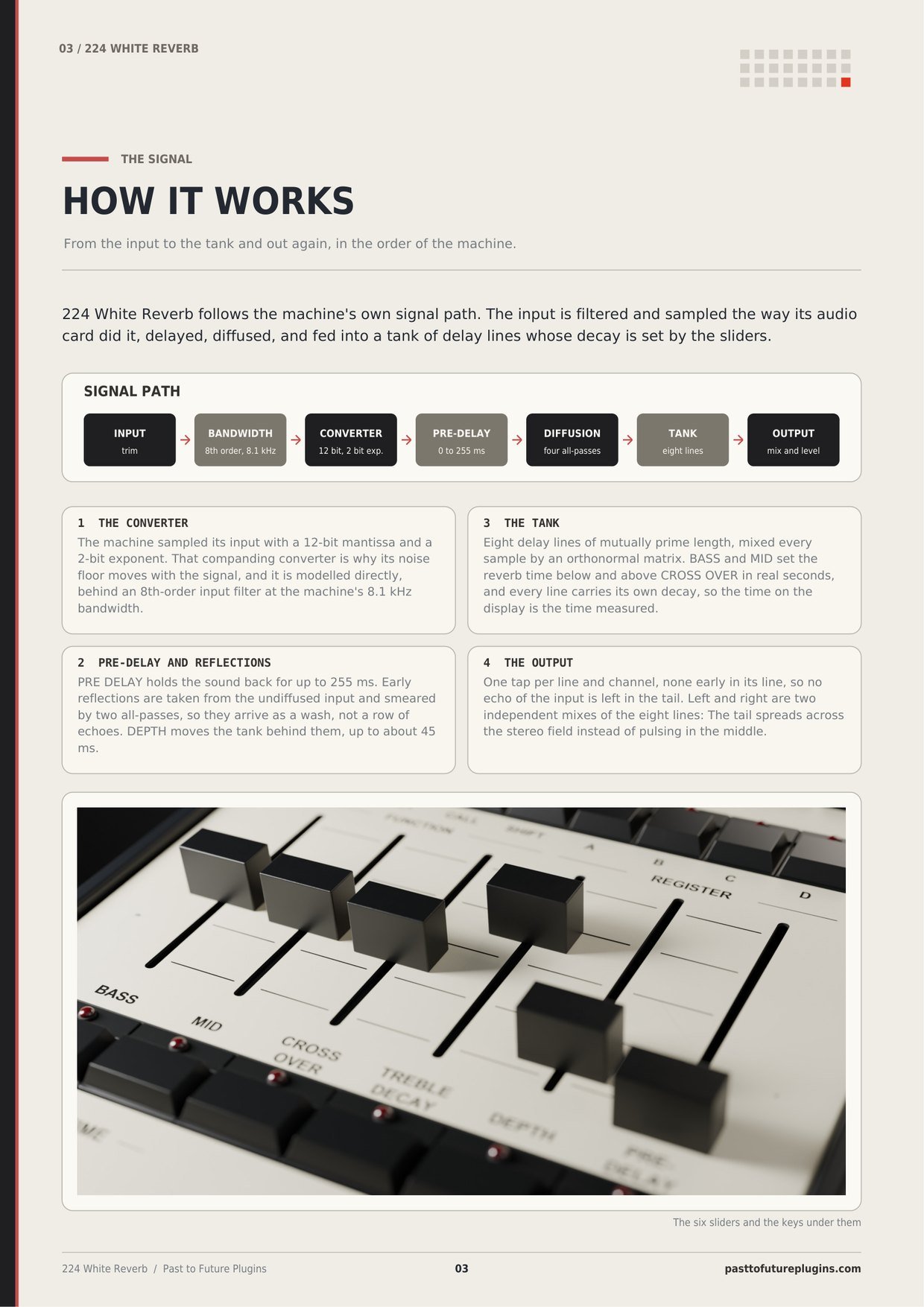
224 White Reverb follows the machine's own signal path. The input is filtered and sampled the way its audio card did it, delayed, diffused and fed into a tank of eight delay lines. BASS and MID set the reverb time below and above CROSS OVER in real seconds, so the time on the display is the time measured.
The remote, built part by part
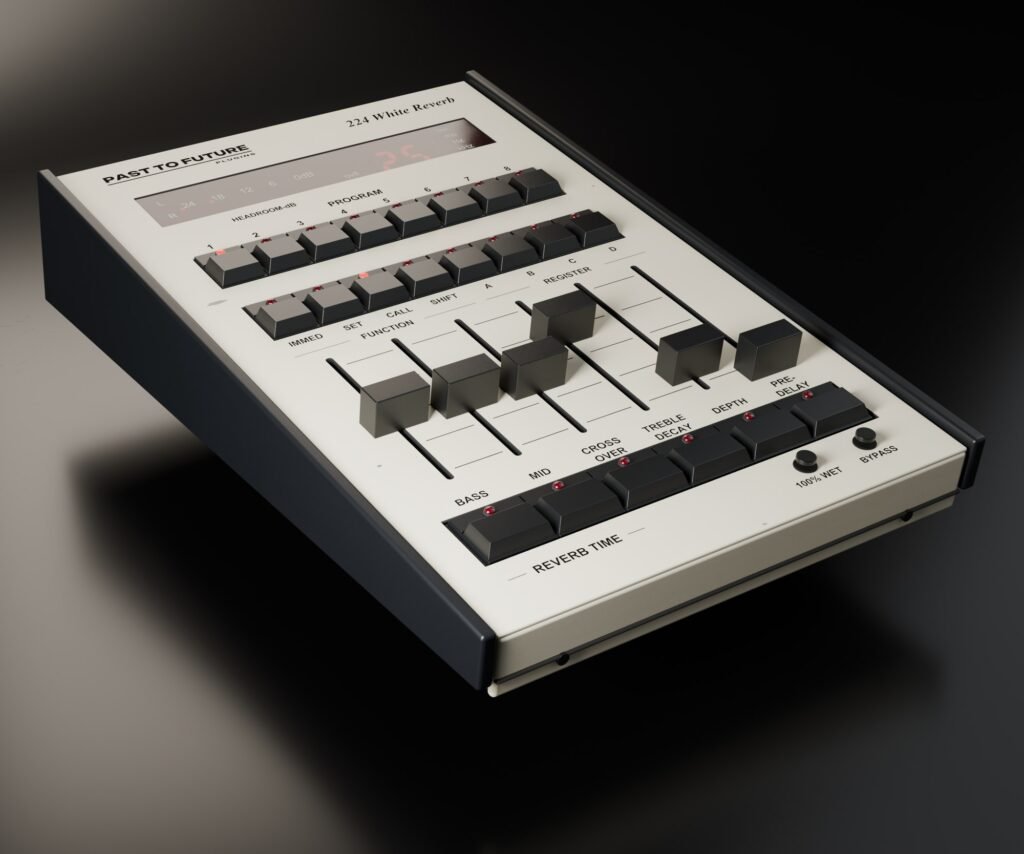
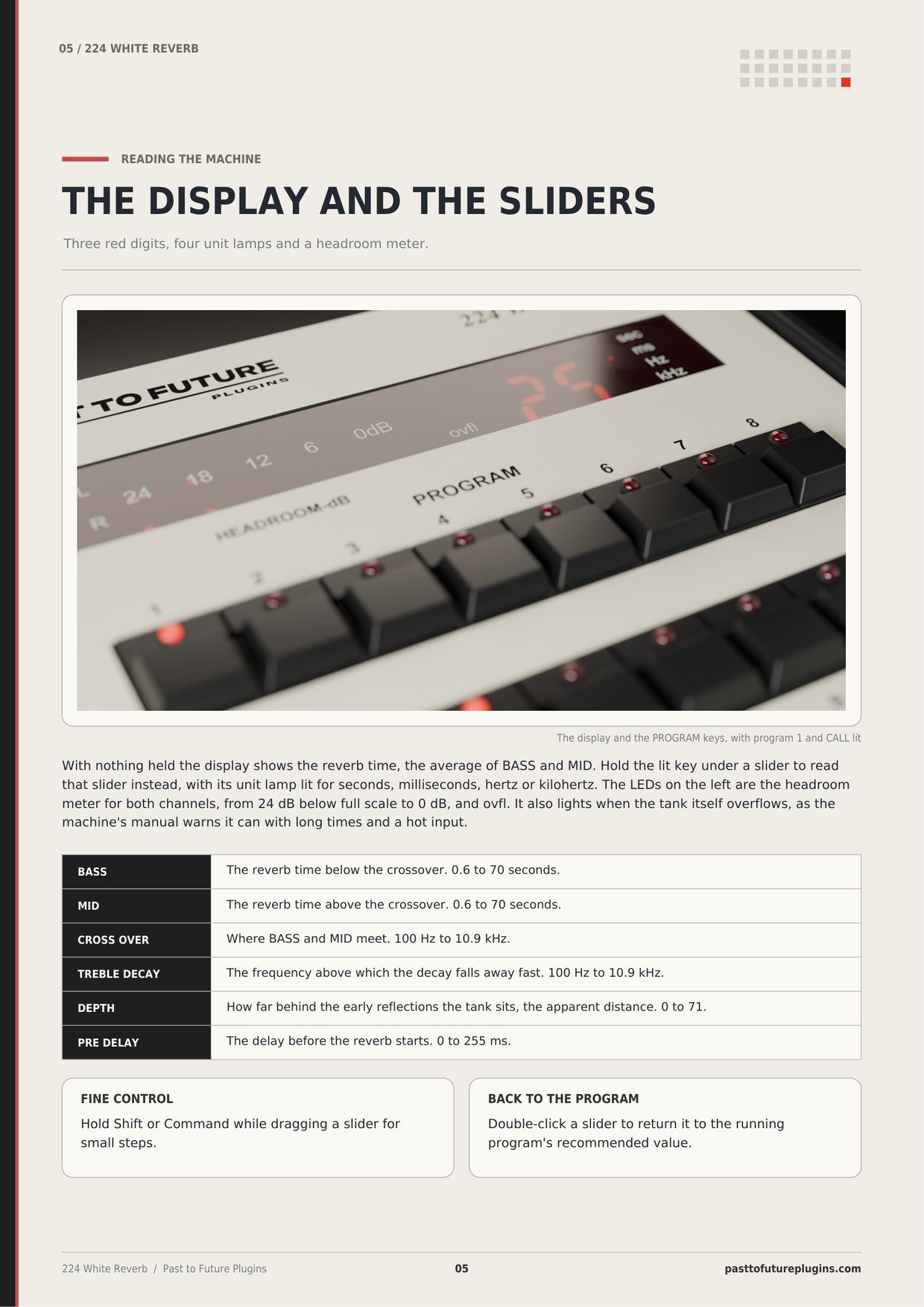
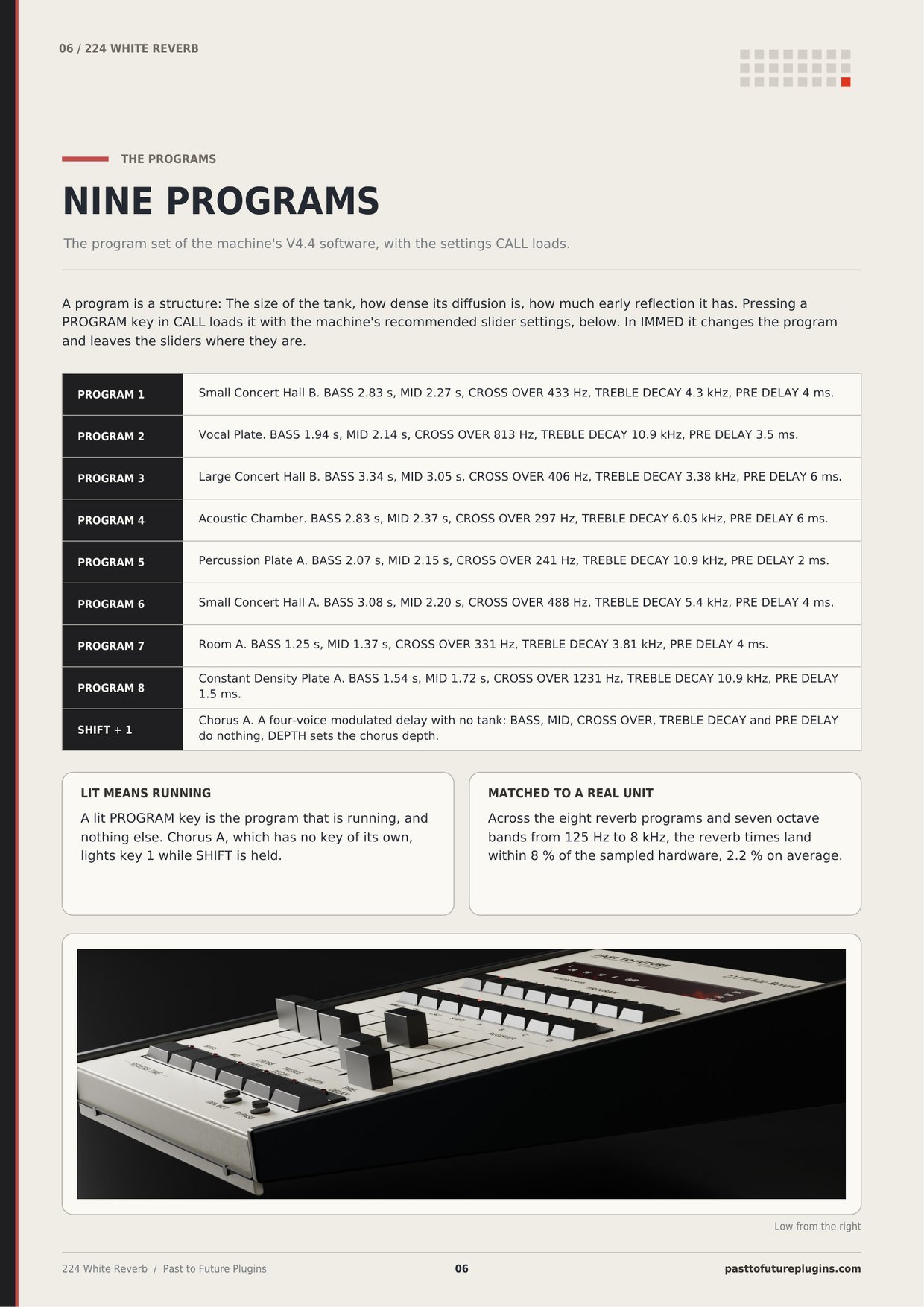
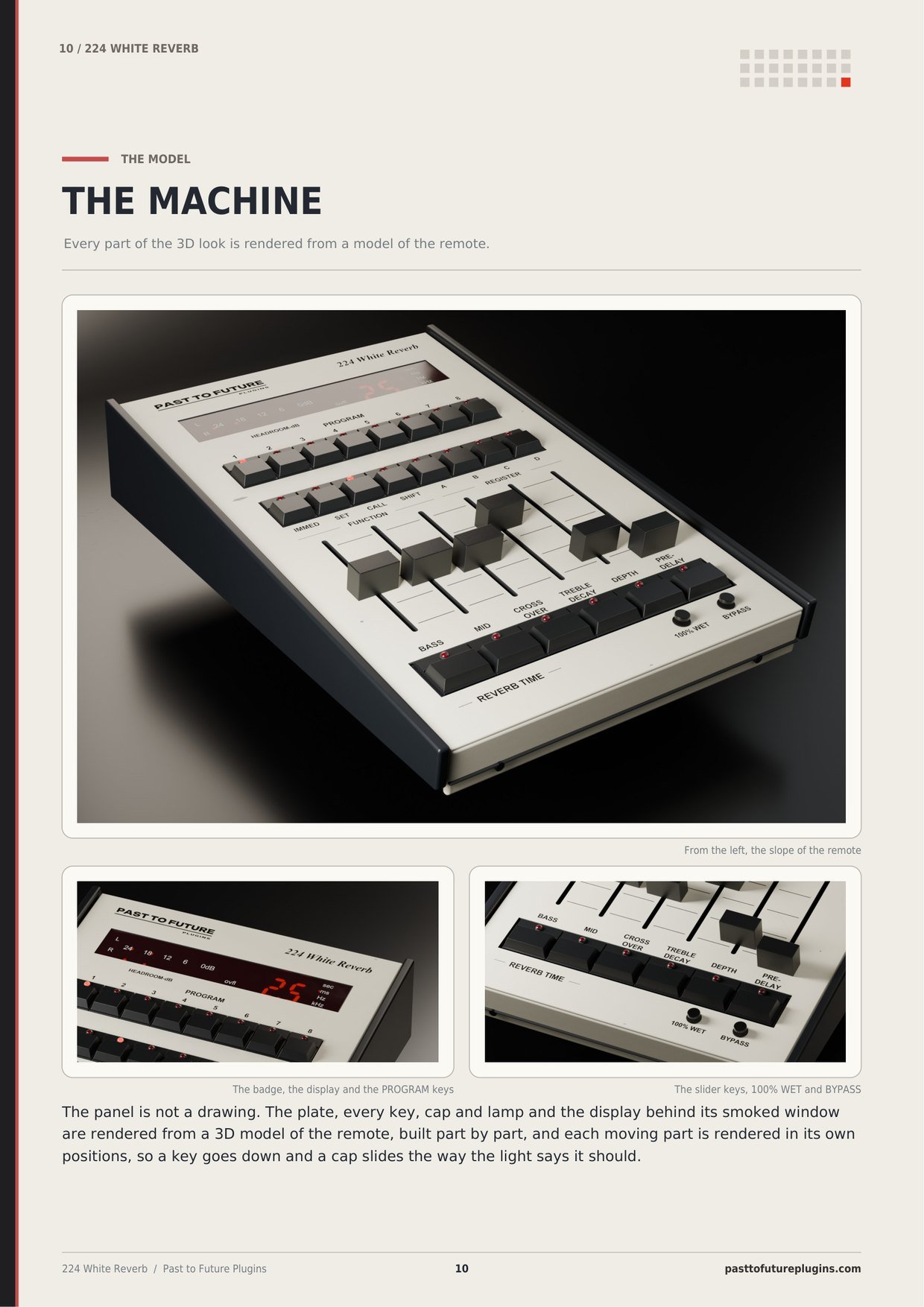
The panel is not a drawing. The plate, every key, cap and lamp and the display behind its smoked window are rendered from a 3D model of the remote, and each moving part is rendered in its own positions, so a key goes down and a cap slides the way the light says it should. The classic flat look plays the same machine, and the choice is saved with the session.
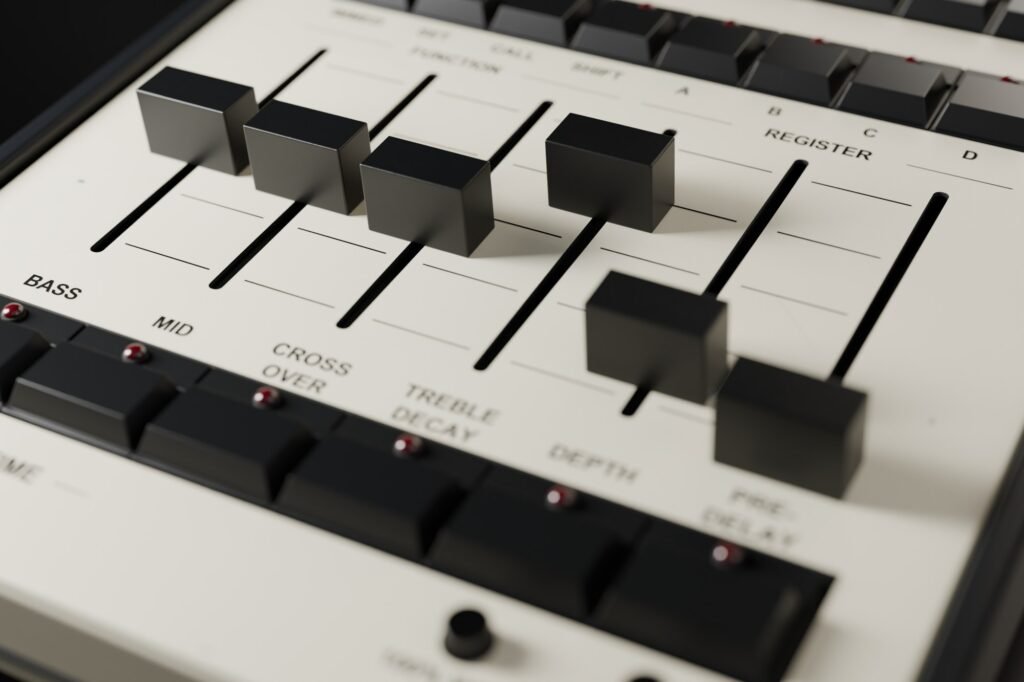
Two reverb times, split at a crossover
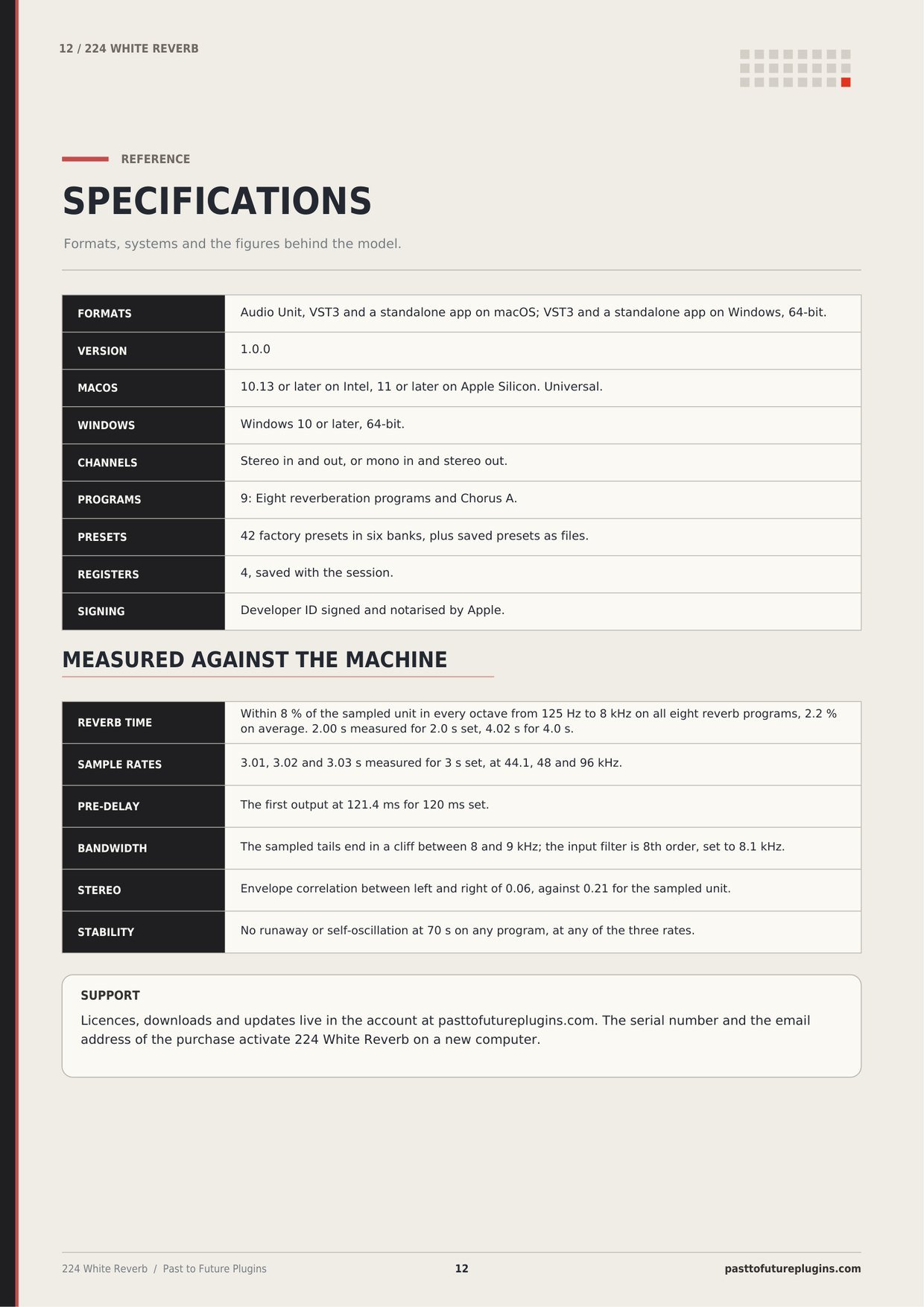
BASS and MID set the reverb time below and above CROSS OVER, from 0.6 to 70 seconds. TREBLE DECAY sets where the top falls away, DEPTH how far behind the early reflections the tank sits and PRE DELAY up to 255 ms. Hold the key under a slider to read its value on the display, as on the machine. With SHIFT the sliders move to the second page: MIX, INPUT, OUTPUT, BAND WIDTH, Mode Enhancement and Decay Optimization.
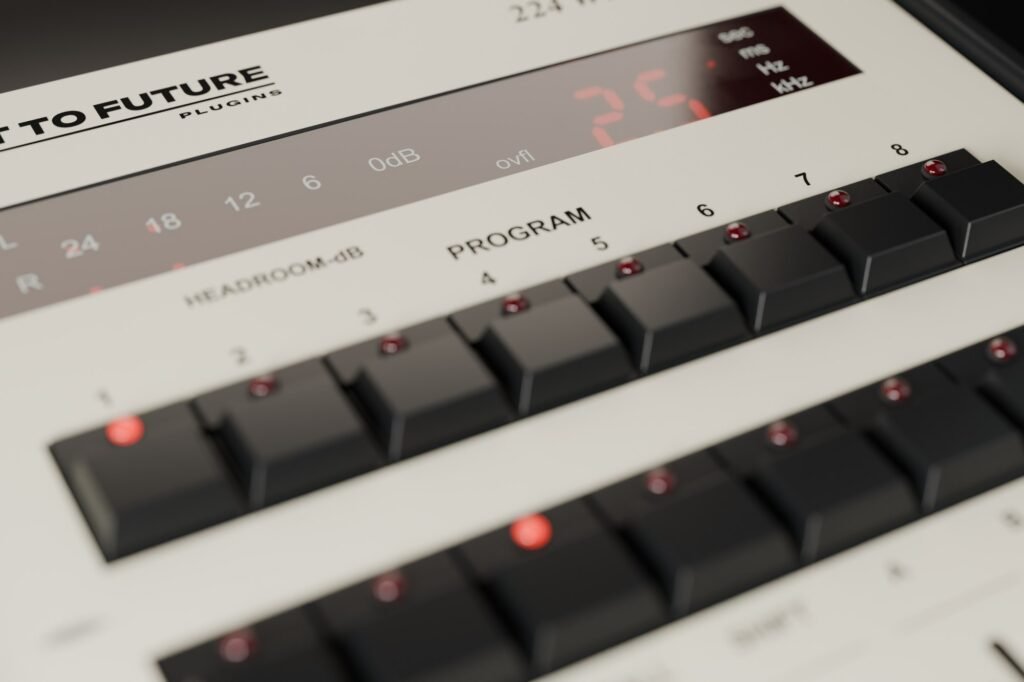
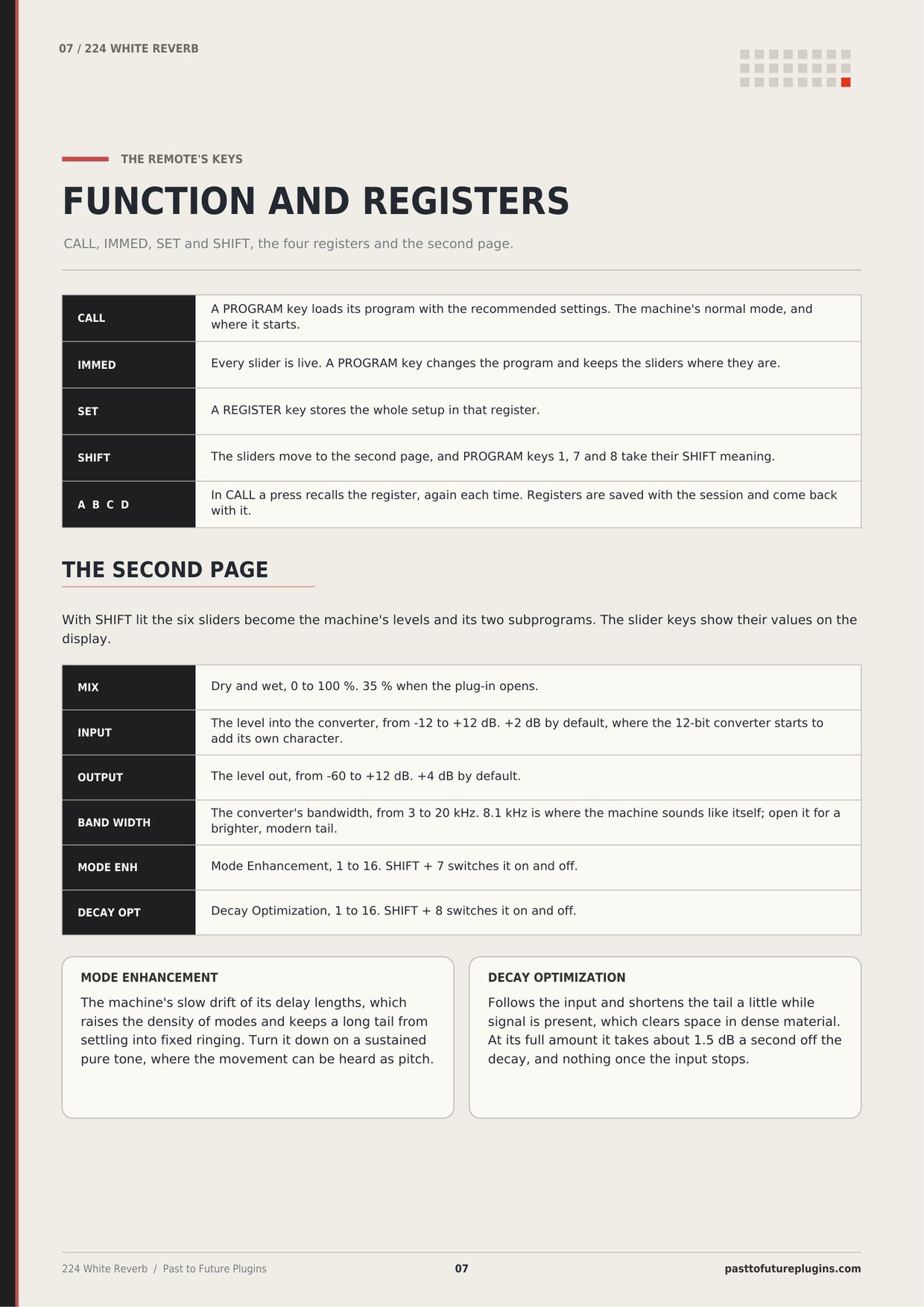
CALL, IMMED, SET and four registers
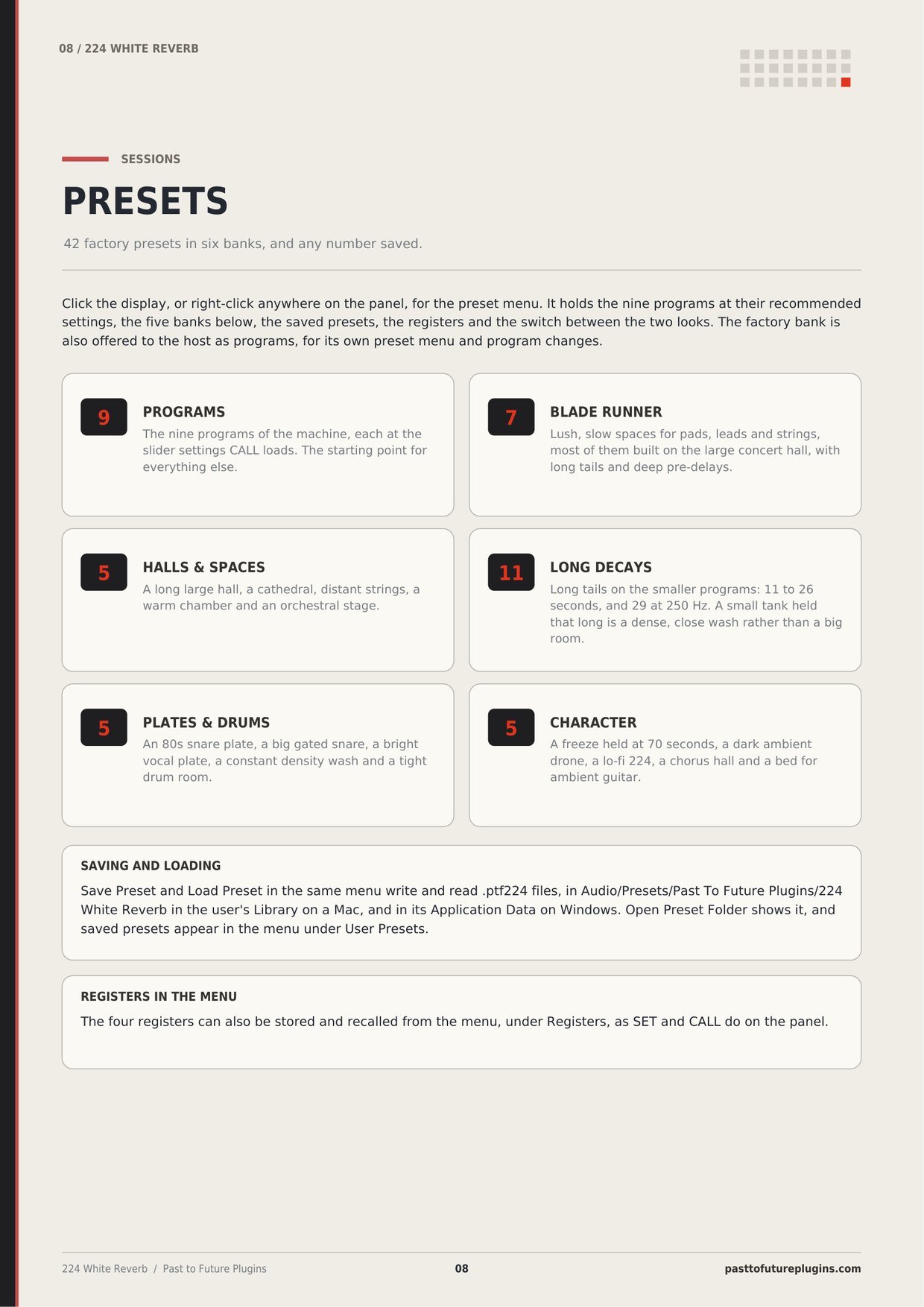
In CALL a PROGRAM key loads its program with the machine's recommended settings. In IMMED it changes the program and keeps every slider where it is, and SET stores the whole setup in register A, B, C or D, saved with the session. Behind the display sit 42 factory presets in six banks, from short plates and a gated snare to long halls and a freeze held at 70 seconds.
| Systems | Windows 10 and later, macOS 10.13 and later |
|---|---|
| Architecture | Apple silicon and Intel |
| Trial | Seven days, everything unlocked |
| Licence | 2 computers |
| Updates | Included. New versions appear in your account. |
| Refund | Seven days, no reasons needed |
| Formats | Audio Unit, VST3 and a standalone app on macOS. VST3 and a standalone app on Windows, 64-bit. |
| macOS | 10.13 or later on Intel, 11 or later on Apple Silicon. Universal. |
| Windows | Windows 10 or later, 64-bit. |
| Channels | Stereo in and out, or mono in and stereo out. |
| Programs | Nine, eight reverberation programs and Chorus A. |
| Reverb time | 0.6 to 70 seconds, BASS and MID split at a crossover from 100 Hz to 10.9 kHz. |
| Presets | 42 factory presets in six banks, plus saved presets as files. |
| Registers | Four, saved with the session. |
| Measured | Within 8 % of the sampled unit in every octave from 125 Hz to 8 kHz on all eight reverb programs, 2.2 % on average. |
| Signing | Developer ID signed and notarised by Apple. |
PTF 224 WHITE REVERB
One payment. Yours to keep.