 Vinyl Sim
7 days free
Vinyl Sim – Direct Drive Turntable System
- Neural Lathe Tube Stage: Powered by neural captures of the real cutting lathe amplifier for authentic analog warmth and tube drive.
- True-to-Life Cut Dynamics: Features real-world wow, flutter, warp wobble, tone/width limits, and stylus tracing wear.
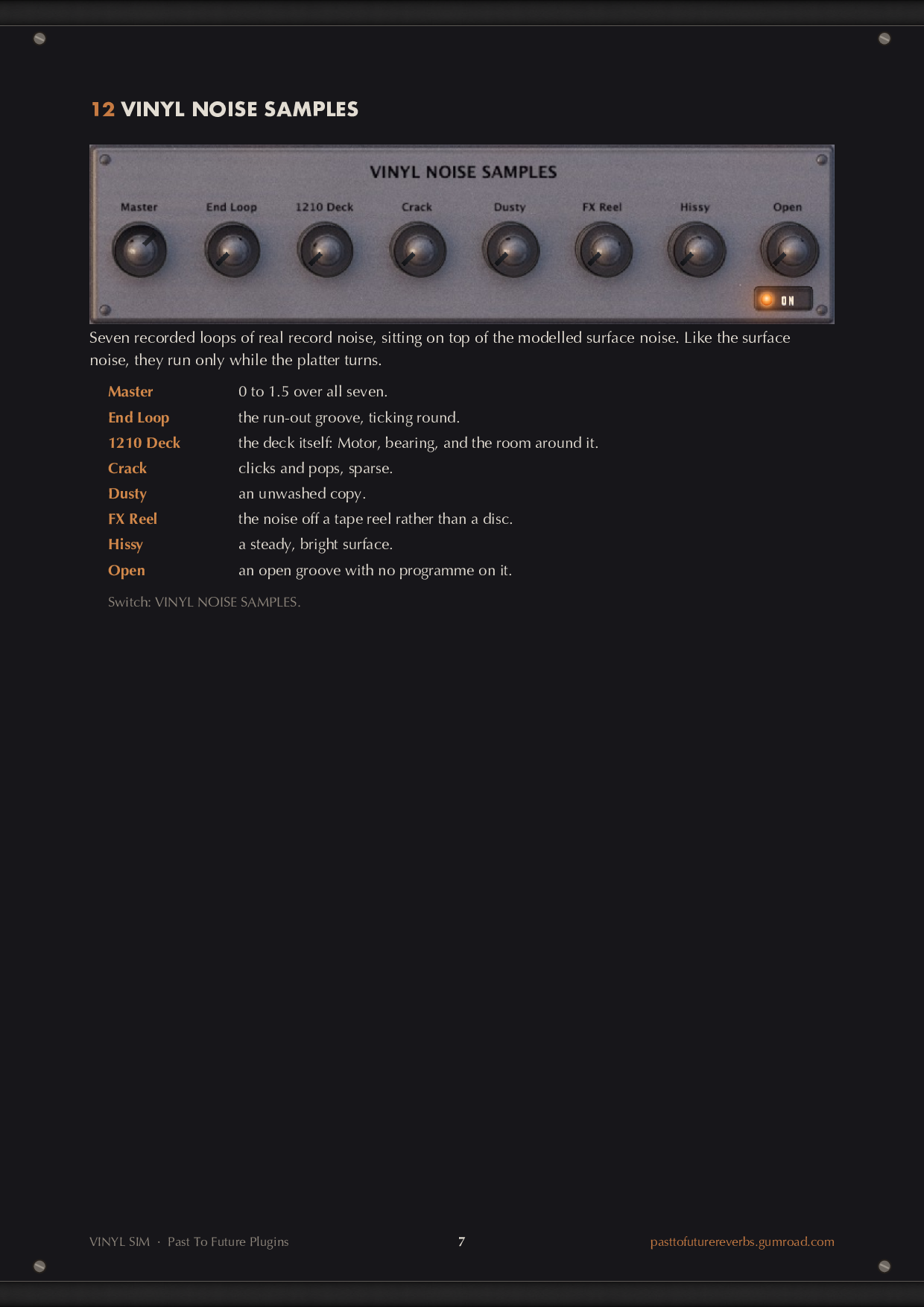
- Measured Surface Noise & Samples: Exact reference-disc hiss and rumble alongside 7 real noise loop samples.
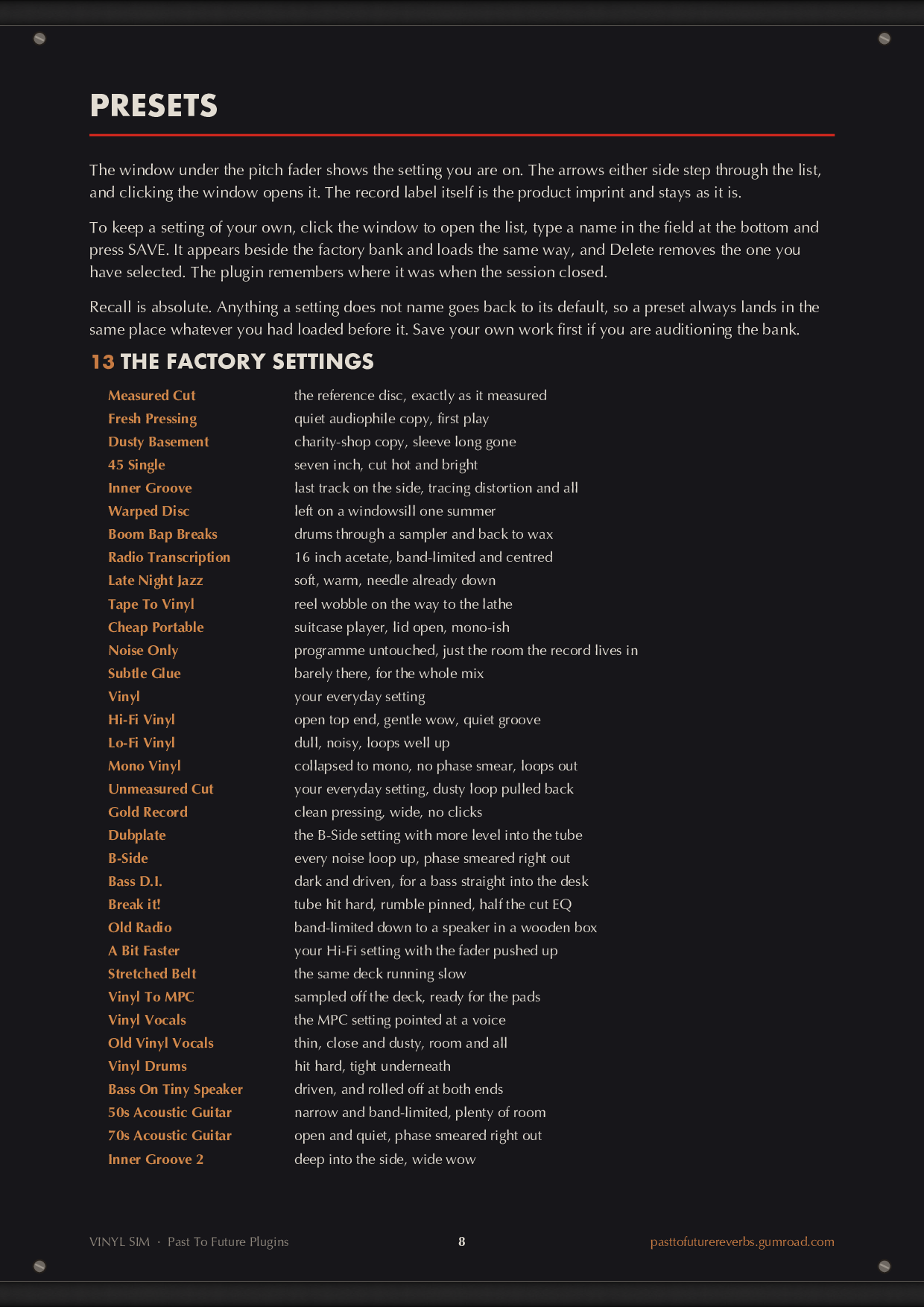
- Full Deck Controls: Interactive direct-drive platter, pitch adjustment, and 34 versatile factory presets.
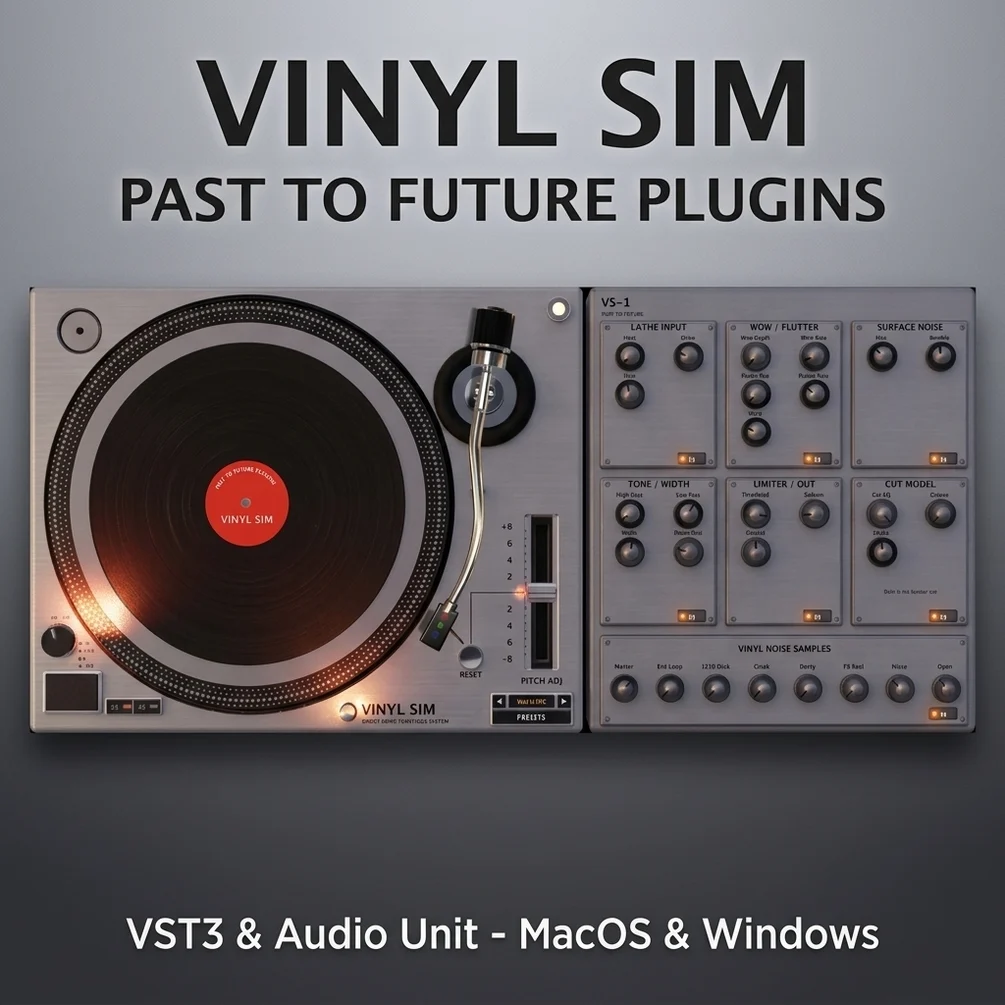 Vinyl Sim
Windows and macOS
For the first time in the world, experience a neural-powered and genuinely real-sounding vinyl simulator that models the entire cutting and playback chain end-to-end. Every detail—from the valve input stage head to physical inner-groove high-end loss, motor rumble, speed pitch error, and true lacquer frequency responses—has been measured straight from an actual cut test disc.
A deck that plays like a deck.
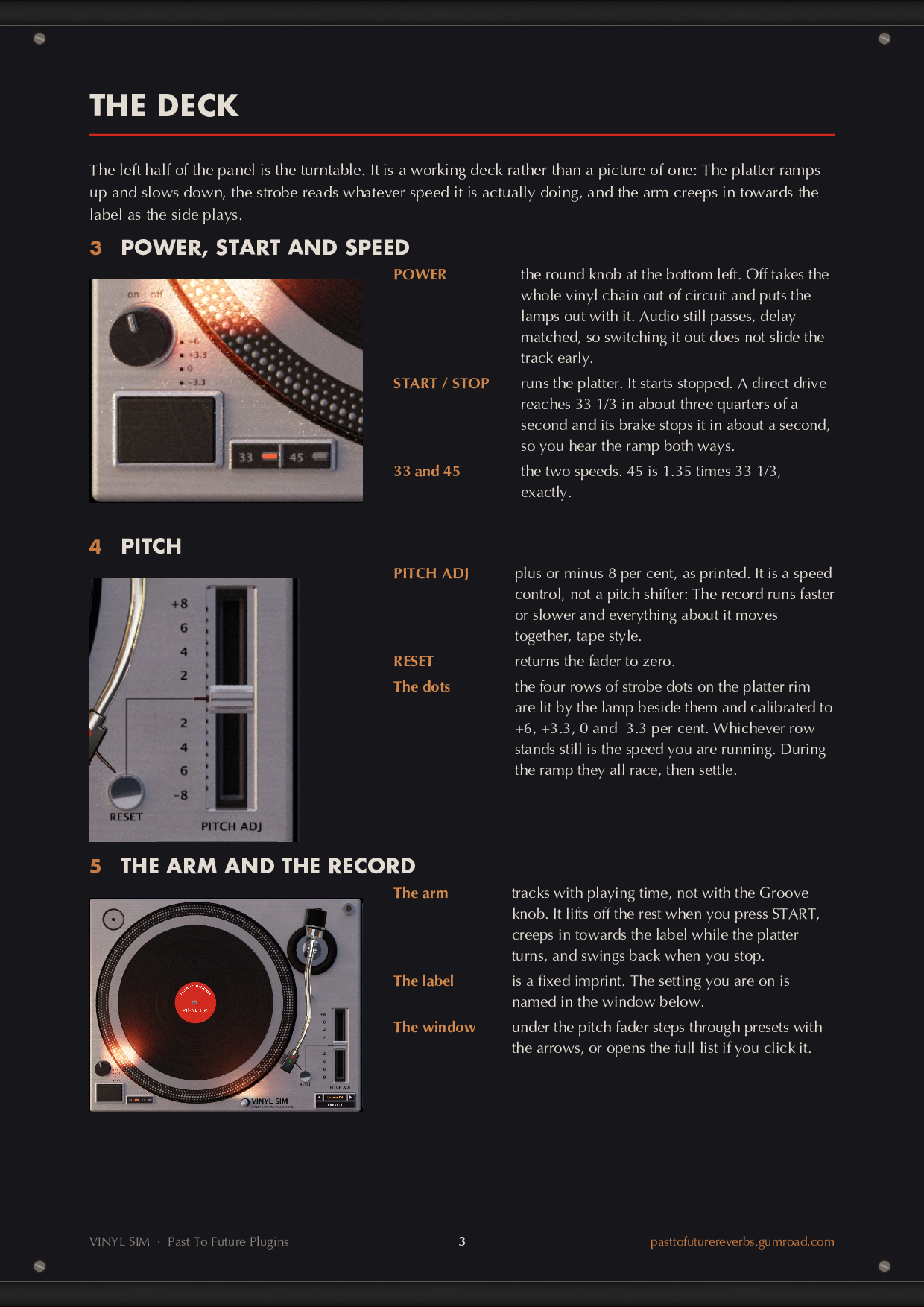
The platter takes about three quarters of a second to reach 33 1/3 and about a second to brake, and everything on the disc follows it up and down. So you can stop it mid bar for a drop, push the pitch fader eight per cent either way, or ride the needle in towards the label and hear the top end go with it. Every one of those moves takes automation.
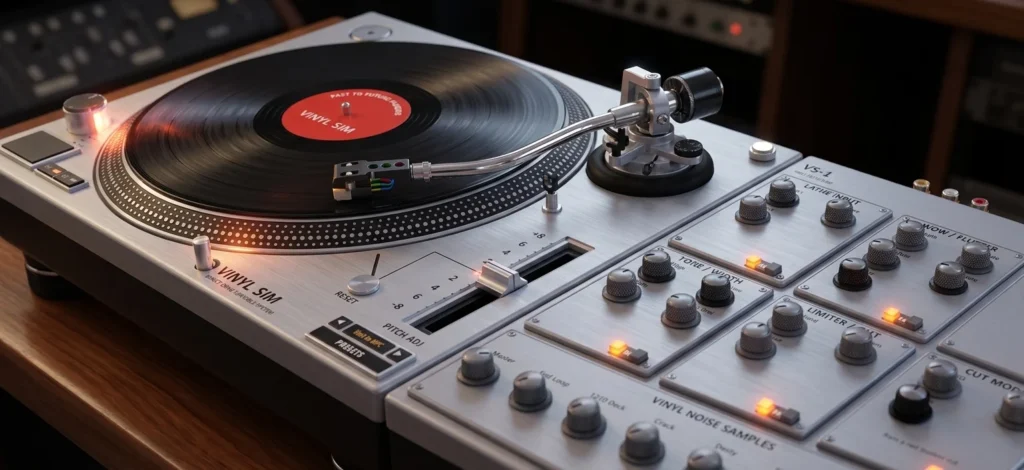
The whole chain, measured.
Vinyl Sim is built for a mix bus as readily as for a single source. At its default settings it reproduces the reference disc: A defined band limit, a moderate narrowing, and a noise floor that stays under the programme. Raised, the same controls describe a record in poor condition. The transport governs all of it, so the character arrives as the platter comes up to speed rather than switching on.
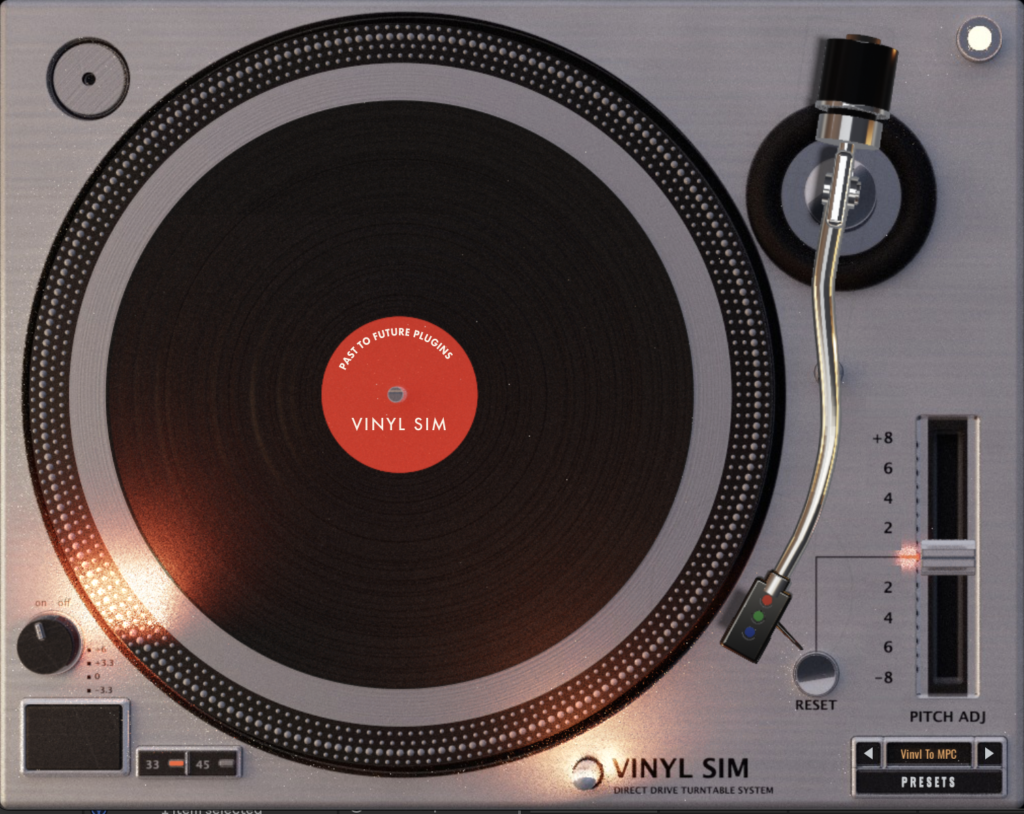
At home anywhere in the mix.
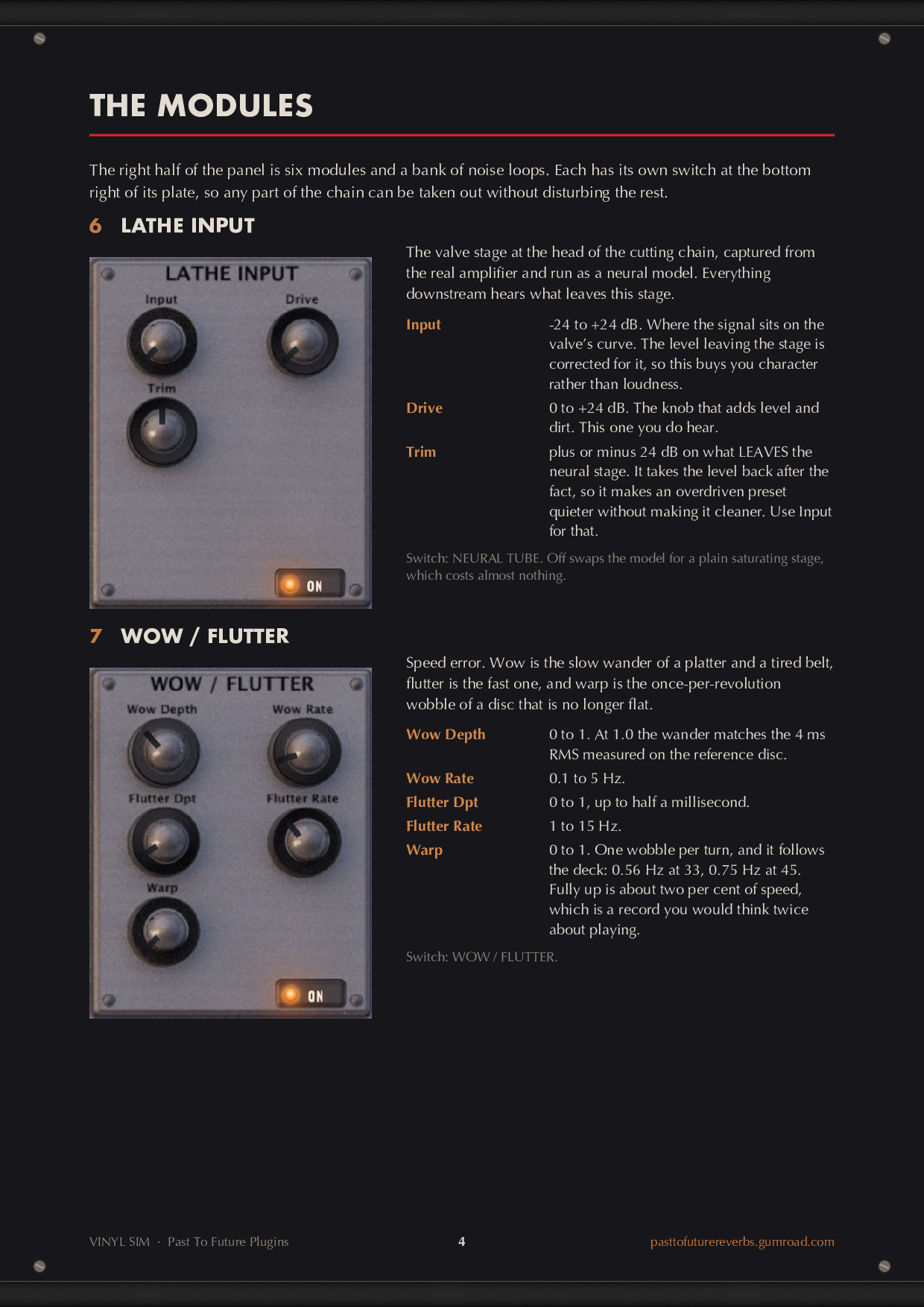
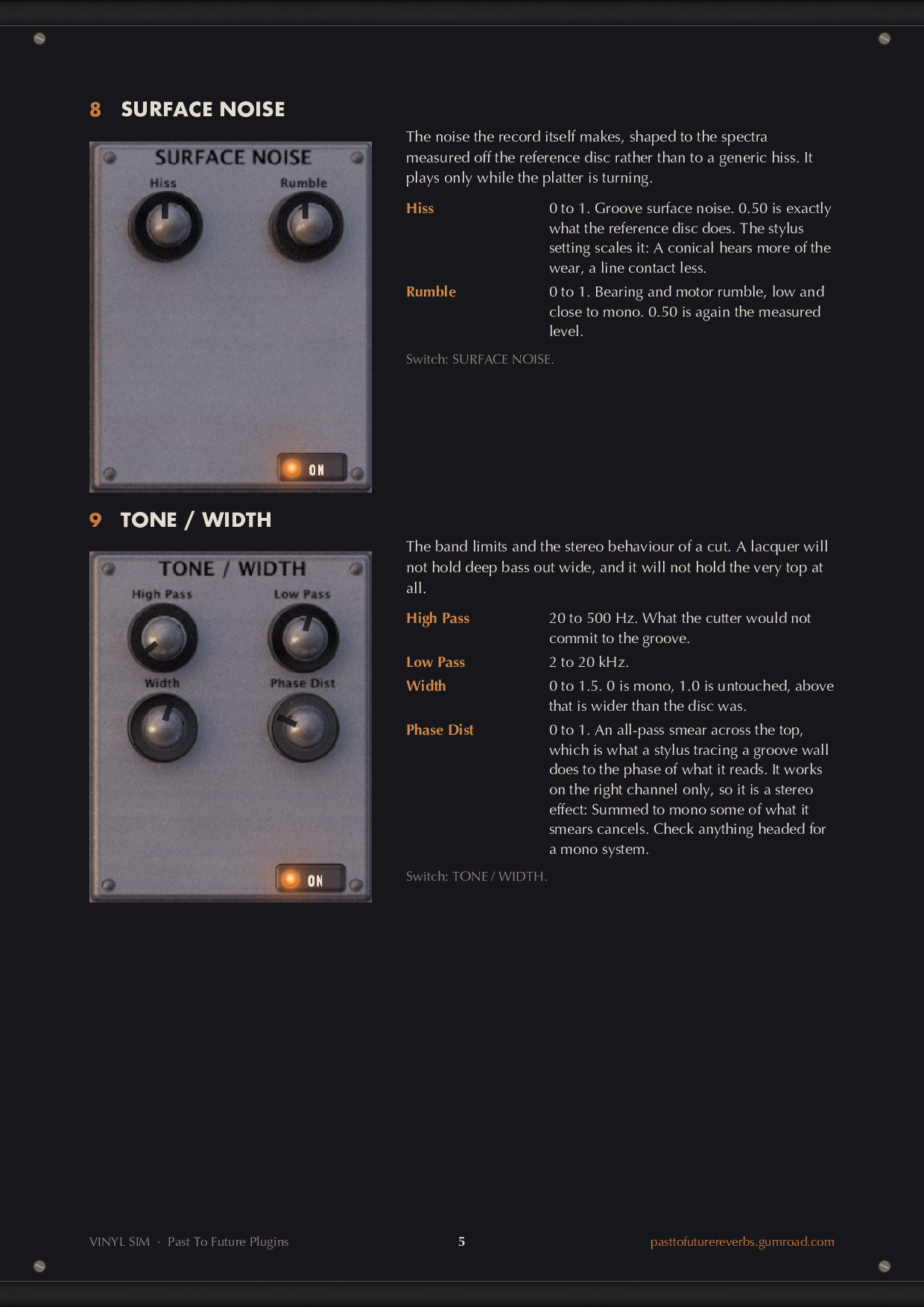
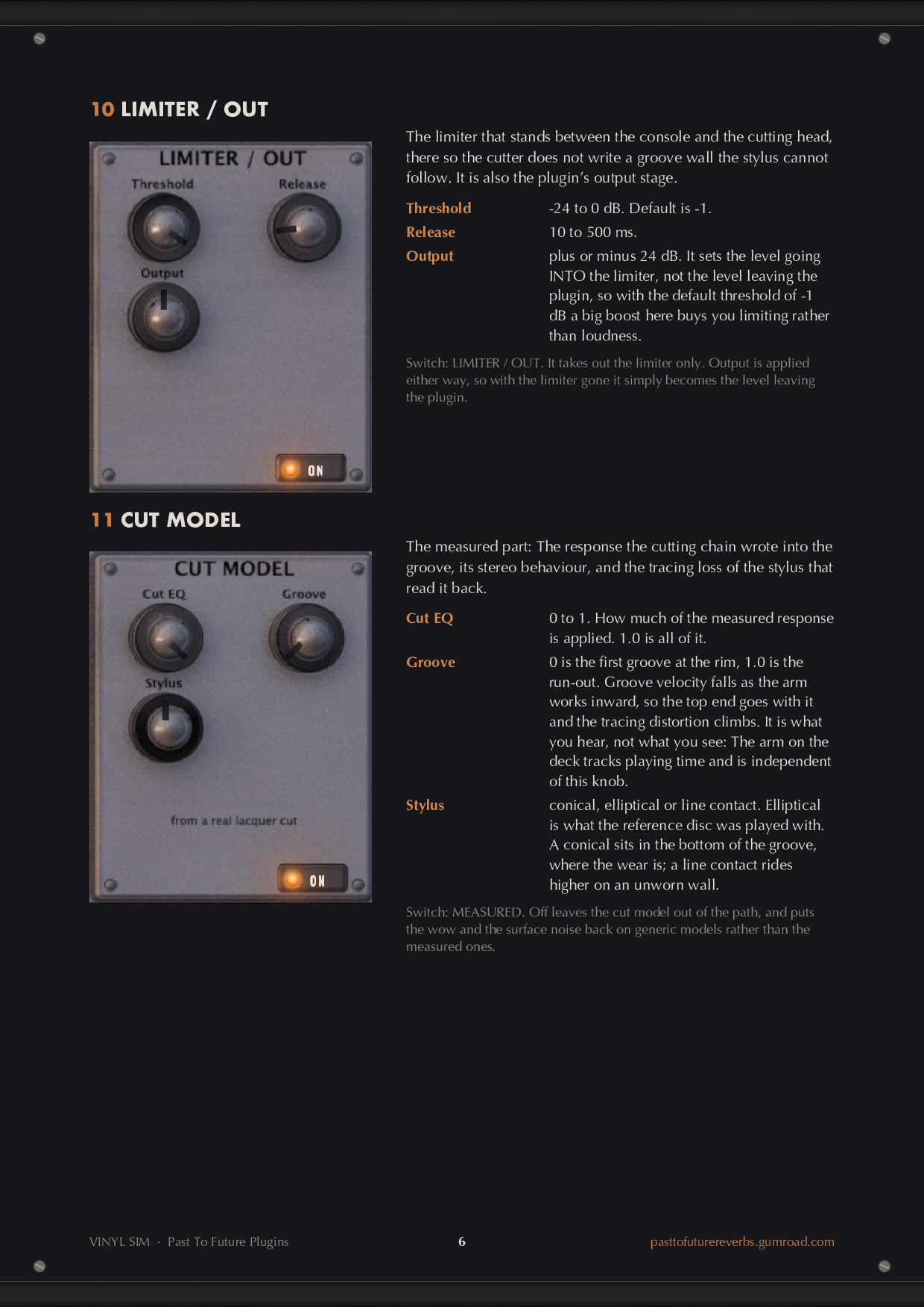
Six modules, each with its own switch, so nothing is in the path unless you want it there. Gentle enough to sit under a master bus without announcing itself. Heavy enough to make a clean loop sound like a crate find.
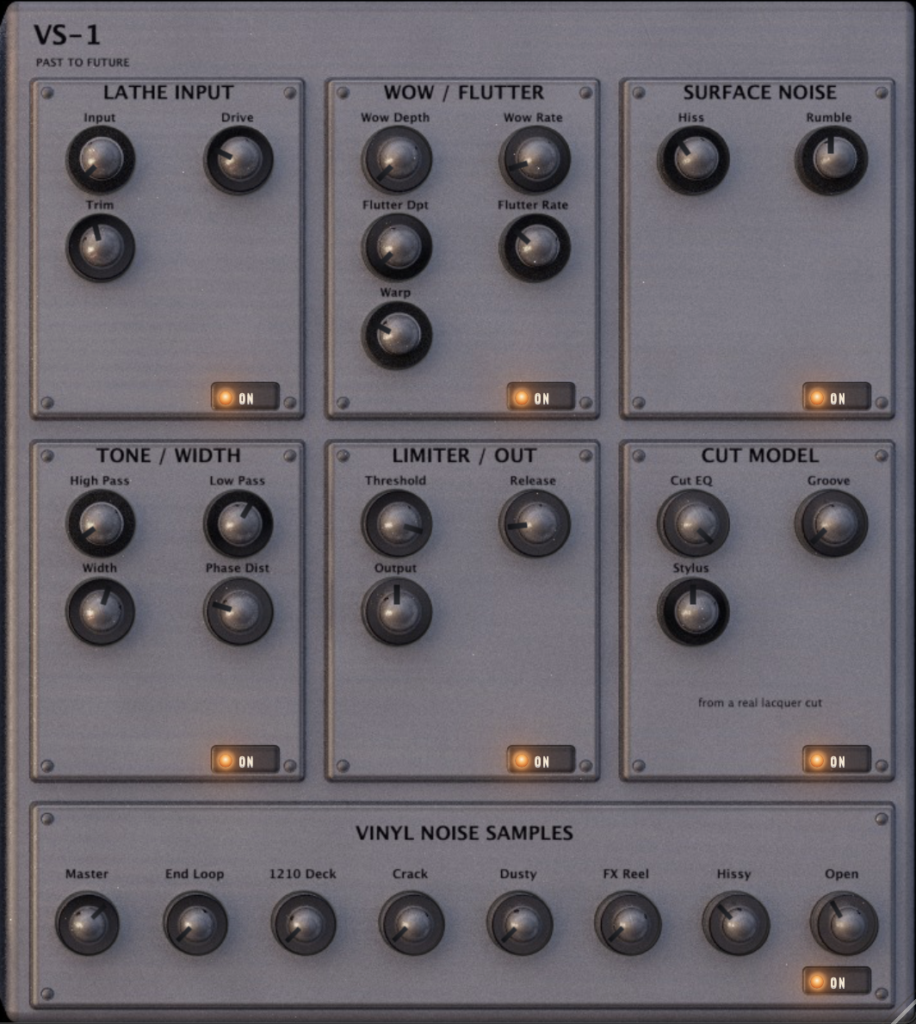
Vinyl Sim doesn’t rely on one algorithm to fake the entire process. The nonlinear character of the cutting lathe’s valve amplifier is recreated using neural captures, while the mechanical behaviour of vinyl is built around measurements taken from the real cutting and playback process.
That means saturation behaves like electronics, frequency loss behaves like a groove, and pitch instability behaves like a rotating physical system. Each part of the chain is recreated using the method that makes sense for that part—not one generic “vinyl” filter doing everything.
| Formats | VST3, AU |
|---|---|
| Systems | Windows 10 and later, macOS 10.13 and later |
| Architecture | Apple silicon and Intel |
| Trial | Seven days, everything unlocked |
| Licence | 2 computers |
| Updates | Included. New versions appear in your account. |
| Refund | Seven days, no reasons needed |
| VST3 and Audio Unit plugin formats | |
| macOS | universal build for Apple Silicon and Intel, macOS 10.13 or later, signed and notarized by Apple for a clean install |
| Windows | 64-bit VST3, Windows 10 or later |
| PDF owner's manual covering every control | |
| Free updates for the life of the product |
This plugin is the best way to get that vinyl sound just short of sending your music to a lathe operator. I find myself putting this on my instrument bus, or end-of-chain master bus every session since I got it. I might turn everything off except the input and a little drive and it makes everything feel a little more real. Automating all the different types of noise and hiss also has been yielding great results for adding convincing, subtle details that previously would've taken multiple recordings and a laborious amount time to achieve.
Best vinyl sim plugin ever made.
Own it? Sign in to write one.
Vinyl Sim
One payment. Yours to keep.
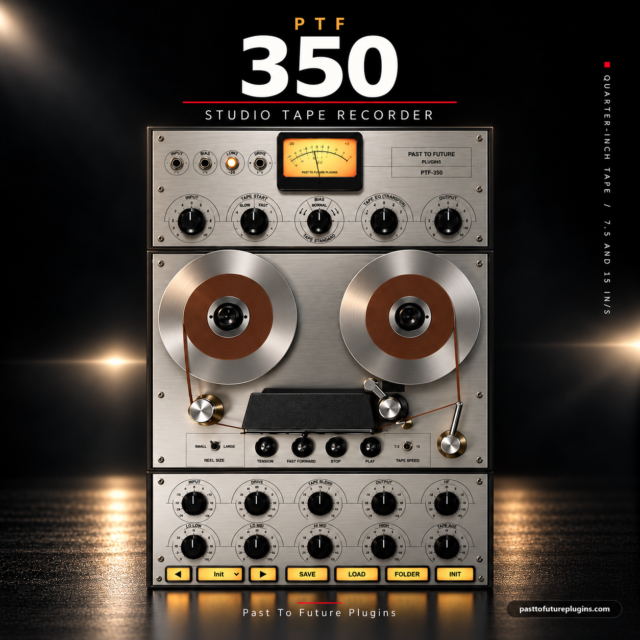
PTF 350 STUDIO TAPE RECORDER
The quarter-inch studio recorder of the 1950s, rebuilt from its operation and maintenance manual and its schematics. Three captures of the real… Windows and macOS € 44,00 Try free for 7 days Add to cart
AUDIOMAX 444 TUBE COMPRESSOR
The legendary ultra-authentic recreation of the 1965 broadcast tube levelling amplifier. Built directly from original circuit schematics using a diode vario-losser gain… Windows and macOS € 35,00 Try free for 7 days Add to cart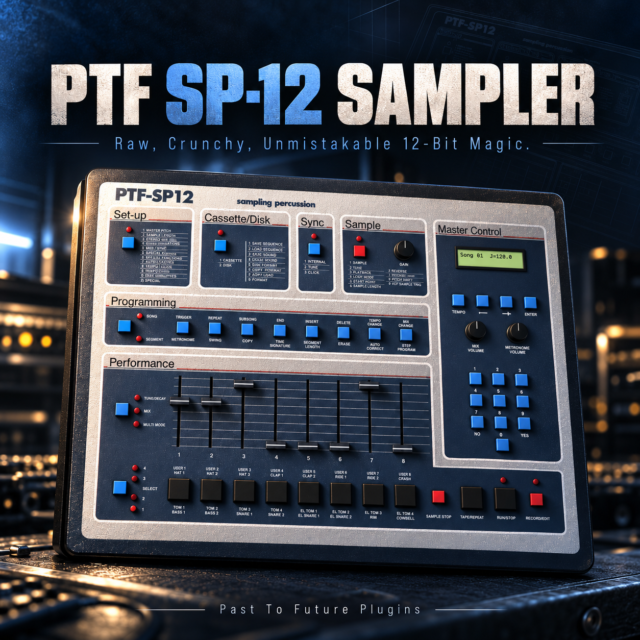
PTF SP-12 SAMPLER
Bring the legendary grit of the ultimate golden-era drum machine straight to your DAW. The PTF SP-12 runs the original Z-80 firmware… Standalone · Windows and macOS € 53,00 Try free for 7 days Add to cart1.0.8, 24 September 2026. Everything that has changed since 1.0.0, the first release.
45 RPM no longer doubles a drum
At 45 the deck runs about a third faster than the material arrives, and the engine covers the difference by replaying a short slice of programme. On sustained sounds that is inaudible. On a drum it could replay the attack, and a replayed attack arrives as a flam. The splice point is now penalised for landing on an attack, and the length of the replayed slice follows the programme instead of sitting at fifteen milliseconds. On a drum loop the doubling measures about forty per cent lower, and the engine makes 86 splices where it made 210, so the repair costs less processing than the fault did. Sustained material is unchanged.
It reaches further back than it did
The minimum is macOS 10.13 now, where the first release asked for macOS 11, and Intel and Apple silicon are in one universal build. Windows is 10 and later, 64 bit, and that build has been signed since 1.0.2.
Lighter on the processor
The Lathe section costs about a third less than it did, with the sound unchanged. A delay that 45 RPM left in the path while the plugin was bypassed is gone, so switching POWER out no longer moves the track.
It behaves like the rest of the collection
The plugin appears beside the other Past to Future plugins in a host's list instead of in a folder of its own. The window opens larger and remembers its size. Every build states its own version number to the host, which the first releases did not, so a build can be identified from inside a project.
Seven days to try it
The activation screen carries a day countdown, a button to carry on with the trial, and a Get a serial number button that opens the shop. A trial marker sits in the corner of the panel and opens the same screen.
The manual
The specification page is read off the build in the download rather than written by hand, so the version, the formats and the minimum system it states are the ones in the box.